Saturday, 20 February 2010

Independent without coming out of the EU

One study demonstrates that neither the independent Catalonia nor the rest of Spain had to request to join the European Union as new associates.
Albert Segura
Barcelona
Ult. Act. 19/02/2010 00:49
The Spanish threat that if Catalonia became independent would automatically rest outside of the European Union is only a threat. So it is demonstrated by a study by Dr Antoni Abat, professor a the University of Stanford, California, to which Avui has had access and that Cercle d’Estudis Sobiranistes and Horitzó Europa have presented today. The future Catalan State would not have to complete any awkward procedure, and neither the new Spain. In front of the legal loophole and the absence of precedents, Abat affirms that "the pragmatical exceptionality" would be the clue that opened the independent Catalonia the doors to remain within the EU, therefore, a political decision ad hoc will have to be taken.
Well done, then, by the towns and cities, organizers of the polls for independence, to have specified in the ballot papers that the future Catalan State will be "integrated in the EU". Because any foundational document, like the declaration of independence, would be an opportunity to tie Catalonia to the EU, specifying that the new State becomes a new associate and that the European legislation is still in vigour. From the beginning, Abat advises, "any Catalan legislation" has to make clear that Catalonia assumes the supremacy of the Communitarian Right" and it has a "will to maintain the stability of the international relations and respect to the fundamental rights". It should express the will to respect the Charter of the United Nations.
They are right who say "Spain breaks". If Catalonia becomes independent, the rest of the Spain becomes a new State too, and, therefore, would play with the same conditions in the international scene. That means, Catalans may threaten Spaniards too, by answering that our secession might left them out of the EU. "Spain without Catalonia is not the automatic successor of the actual Kingdom of Spain in the international field, because these secessions are always negotiated", Abat tells us in the study Independent Catalonia within the EU, that gives us examples of the dissolutions of the USSR, Czechoslovakia and Yugoslavia.
Today, presentation of the report
The same would happen to Scotland and the United Kingdom, they would have the same legal status in front of the EU. "The idea that the United Kingdom vetoes Scotland to the EU is nonsense, because in the same way, Edinburgh could veto London", Scottish Prime Minister Alex Salmond defences. Today, their ex-Minster for Europe, External Relations and Culture, Linda Fabiani will participate in the presentation of this report in addition of the President of the Parliament of Catalonia, Ernest Benach, and the EMP Ramon Tremosa (CiU), Oriol Junqueras (ERC), Raül Romeva (ICV) and Izaskun Bilbao (PNB). The Vienna Convention, the study remembers, previews that when a region becomes independent, it can freely decide whether inherits or not the rights and obligations subscribed by their ex-State.
Catalonia and the new Spain would have to submit to the European Court of Arbitrage, which would distribute rights and obligations and would decide how they would be represented before the Council, the Commission and the European Parliament. While the EU is only a matter of States, the best way to be represented is by having an own one. Finnish are only 5 million inhabitants, but actually have 14 MEP's at Strasbourg, twice as many Catalan MEP's. The seven Catalan MEP's place Catalonia at levels of Slovenia, with 2 million inhabitants, or Luxembourg, with less than half a million.
Is not possible to negate to the seven and a half million Catalans, from one day to the next, the study says, the rights that they already possess as Europeans; freedom of the person's movements, goods and capitals, services, possibility of voting in local and European elections, and belonging to the inner market within the Euro. Excluding Catalonia from the EU, the rest of Europeans remained without exercising these rights in the Principality.
Article published at Diari Avui, February 19th, 2010.

Tuesday, 9 February 2010

If you don't go, they come back


Of all the adverts we have published, full page and colour, I believe that this is the most equilibrated and potent as image. There is not a lot of text, it becomes very contrasted, with an intense black, nothing like a fly's wing, practically without any transparency from the previous page, even the paper, with a little visible surface with a slight rough grain orange-skin is useful. Magnificent from the point of view of the printer.

The soldiers lifting the flag have together three very clear meanings; fight, victory and team work!

Fight because Iwo Jima was not the last battle, after achieving victory on that one, the fight still continued for a long time. As it happens with Catalonia.

Victory because they have put up the flag and saved the island. Build another base camp. Advance, battle by battle towards our independence.

Team work and effort, because battles are not won by soldiers on their own but coordinated under a commandment and one strategy. Too many times and thousands of times a day, a lot of Catalan patriots want to go alone, not accepting neither commandment nor strategy. Their lonely effort was not fire power, they do not understand that every member within the team reinforces the others and amongst them become a winning team, like in Iwo Jima.

The sentence, battle roar, signal of hope in all and for all; "ARA MÉS QUE MAI, NI UN PAS ENRERE!" -Now, more than ever, not a step back!-. The logo of Força Catalunya identifies what it is needed the most in Catalonia, strength!!!

The star of Catalunya Acció and the star of the flag mean the Star of Freedom, the independence of Catalonia!

"Si tu no vas, ells tornen" -if you don't go, they come back-. Let everybody go so the Spanish, the supporters of regionalism and the ones who disguise independence for autonomy within Spain do not come back. Nothing that stinks of Spain, nothing that kneel down or seeks fraternal relationships with Spain.

Article by Salvador Molins. Counsellor Catalunya Acció.

Image Published on Feb 7th 2010. Diari Avui, Barcelona.

Sunday, 7 February 2010

Complying with the law

Catalunya Acció UK is pleased to congratulate Catalunya Acció in the Principality of Catalonia for admitting to have reported during 2009, 3000 shops and other establishments that are in breach of the Normalization of the Catalan Language Act. The Act was endorsed by the Parliament of Catalonia late in 2007 and has not been contested against the Spanish Constitution by any Spanish political party. It allows citizens to report to the authorities of those who do not comply with the terms of the Act.

In words by Santiago Espot, Catalunya Acció is doing what other associations, exclusively dedicated to the promotion of the Catalan language - but subsidized by political parties, are leaving to anonymous citizens to do. Catalunya Acció UK congratulate their brave members and invite other Catalans to join in this action to demonstrate that the ancient Catalan spirit is still alive and the actual subduing of Catalonia to Spain is within the last moments. Needless to say, only those who are against the freedom of speech in the own language of Catalonia, which coincided with those who denounced the celebration of the "illegal" plebiscites for independence, have protested against the the actions by Catalunya Acció amid claims of acting like the nazi Germany. At this moment Catalunya Acció UK wander whether those who negate the application of a, nevertheless, Spanish law are the real nazis. And also wander whether the actual authorities will apply any of the fines previewed in the Act. 

CATACCIO_Blog

Friday, 22 January 2010

Adding for independence

Occupied countries have always suffered the stigma of division. It seems a previous condition to freedom. It is not strange, then, that our outstanding leaders have warned us about this danger and wave the flag of unity. One of them, writer Agusti Calvet -better known in History as Gaziel-, in the most difficult moments of our history, the beginning of the Francoist regime, wrote: "At this moment, I would sacrifice everything for the unity of Catalans. It is not that is an essential job; it is the only job".

Luckily, we do not live in a gloomy dictatorship, but we live in a time where every day, more see that our future will be well dark if we do not achieve independence. It is one of the most important moments of our history, although we are conscious that achieving our objective will not be easy and, because of that it is prevailing amongst us the spirit of the union that was defended by Gaziel.

This is the intention that has urged the manifest "Suma Independència", presented on December 17th, in Barcelona, being one of the more that 1,900 signers to the date. Some voices have presented it as a competition against other options supporting of independence more or less consolidated in the eyes of the public opinion. Furthermore, there is always who sees it as a dark manoeuvre to divide the votes of those who wish the independence of Catalonia when, in fact, this vote is already divided amongst different political forces with representation in the Parliament for many years. Take a look at the number of supporters of independence voting CiU -Convergència i Unió-, ERC -Esquerra Republicana de Catalunya- or Iniciativa. Even some of them count in the rank and file of the PSC -Socialists-, some of their members collaborated enthusiastically in the organization of the ballots on the last December 13th. And we should not forget the big number of supporters of independence that remain at home every election. Would you like a bigger division of the vote than today?

Agglutinate all this vote, making it effective with view to our independence is not easy. Among other things, because the people know perfectly that, in election to the autonomous Parliament, we can only elect those who have to administrate the crumbs that are left by the Spanish power. Overturn this situation and transform the next elections to Parliament into a plebiscite for independence of Catalonia comes by articulating a front for the "yes", the widest and transversally possible. That means, a coalition where the only common denominator among all the participants is the proclamation of the Catalan State. The origin and political profile of its constituents must be varied and represent all sensibilities. It is not being "within" but "besides". Because a coalition is a temporary alliance of people or parties with a common objective, and nothing better than representing the wish for unity that is claimed by the big majority of patriots of our country. We know that in this union, neither we are equal nor we want to be. Who does like uniformity? Therefore, there will be big ones and smaller ones. This is the key to success, know how to combine potentials. One coalition stages an authentic team spirit and their most outstanding faces may be identifiable with the different shades within the movement supporting independence. We cannot be so ingenuous to believe that all who desire the independence of Catalonia will be willing to unite in only one of these shades and achieve absolute majority.

To crystallize this initiative, it is essential to see beyond our own lines and be able to build alliances and weave complicities. We can not minimize ourselves because all forces supporting independence, be it the smallest one, are necessary in this titanic battle. Valuing strengths and possibilites of one or the other goes beyond the simple number of militants. In these determining hours of our history, there is no place for childishness and school yard envies.

Catalonia demands to leave personal interests apart and to have a vision to go beyond our own convinced. The signers to "Suma Independència" are willing to make this gesture.

Who is accompanying us to add for freedom?

Santiago Espot
CEO Catalunya Acció

Friday, 8 January 2010

Comment on the article "The future of Catalonia: Of bulls and ballots", The Economist

Almost a quarter of a million citizens of Catalonia, including new coming migrants, have already backed up the independence of Catalonia by voting in some 167 illegal polls. And this is only the first wave of ballots, as two more are to come. Perhaps we should remind the journalist that they were prohibited by the Spanish Courts. Interesting datum this one!

Also, why have you not mentioned that the actual question of debate -the Independence of the whole Catalan Nation, not only the Principality of Catalonia- is illegal in the so-called Spanish democratic Constitution? Is that an interested bias from you, or does it respond to an obscure diktat by certain Spanish institutions?

Anyway, Catalonia is on the road to independence, this is unstoppable. No matter how many articles against Catalonia are published on the media. Be sure that within the next few years -perhaps before-, Catalonia will achieve its freedom and will take its seat at the European Union institutions, among the 27 other independent countries that form this organism.
Catalonia, the Next State in Europe.
Jordi Margalef
Catalunya Acció UK

If you wish to read the full article by the Economist, please click on the link below:
http://www.economist.com/world/europe/displaystory.cfm?story_id=15212057#top

Saturday, 26 December 2009

Evaluation of the success of the polls for independence on December 13th


  1. First, we would like to congratulate all the volunteers who have participated in the organization of the polls on December 13th. We must recognize that, thanks to their work, it has been possible to extend the first poll at Arenys de Munt to more than 160 municipalites in only three months, generating a never seen feeling of hope among the voters. All of them have worked as one and for a goal. And they have succeded.

  2. The polls, as primaries of our independence that they really are, have made possible the quantification of 200000 Catalans ready to become active promoters of the independence of Catalonia. This is only with the first wave of ballots, without support from the big mass media, without electoral campaign or public funding. And this is the big result of these votes. And it the clear symptom of the beginning of a civic and democratic uprise that will spread around our country and has no stop.


  3. From the other hand, these polls have been the best campaign, at national and international level, never made for the cause of the freedom of Catalonia. We have achieved that the topic of the independence of Catalonia was at the centre of the political debate, with the big mass media unable to silence it. Thanks to the big international impact and follow-up, we have been able to let the whole world know our wish for independence. As for Spain, with these polls, Catalans have demonstrated that we do not accept to live kneeling and they have not conquered nor will ever conquer us.


  4. These votes have put on the table a new form of politics that has left all traditional political parties disarrayed. However, the initiative has been carried out making feasible and close to the people and idea that was unthinkable a year ago, an independent Catalan State.


  5. And finally, we would like to highlight that, with the organizational quality of these polls and the overwhelming affirmative result, have sent a first quality message of democracy and order to our main allies, which will have to validate and recognize the Catalan State as a full right member within the international context at the moment we declare our independence.

Barcelona, December 17th 2009.
CATACCIO_Blog

Friday, 25 December 2009

Remember to win again

Catalunya Acció UK wish you all Merry Christmas and a Happy New Year of freedom and Independence.

Image from the offering by Estat Català at Francesc Macià's tomb, on the 76th anniversary of his death, December 25th, 1933. Barcelona.

Thursday, 10 December 2009

"Yes to independence". Speech at Castellbisbal, November 27th, 2009.

AN20091127_Consultes13D_1000x
Ladies, gentlemen;

Firstly, I would like to thank all the inhabitants of Castellbisbal who with their commitment have made possible this presentation tonight, an I feel especially proud to have the honour to address to you in this historical moment for our country. Next Sunday, December 13th 2009, polls will take place in more than 150 towns and cities asking their inhabitants about the independence of Catalonia. Democracy in its purest state. In three months, we have gone from the first poll at Arenys de Munt to organize more than 150, thus we must be fully conscious of this qualitative jump and the political implications that this wave implies, and will imply in the future. Thanks to this initiative, to the determination and courage of the men and women from all these towns and cities, we may assure that Sunday December 13th will be a big success. It will be the beginning of our victory, and we can be very proud of.

The patriotic gesture of all of you, voting "yes" to independence of Catalonia, represents the first time in the last thirty years of watched probation, not authentic democracy -do not fool ourselves, that Catalans will come out of the identity trench where we have tried to defend our national features, be them our language, our history or our traditions. So to take initiative and going on the attack to achieve our authentic freedom as a nation, which is no other than our political independence, because no other exists. Nobody wins any battle remaining indefinitely in their trenches. Hence the importance of the polls. We might say that it represents the Prats de Molló of the 21st Century to Catalans; the primaries of our independence, which will be won town by town; the reconquest of the authentic Catalan spirit that has been tried to snatch from us with wars and dictatorships. And we must say that out loud: with wars and dictatorships, in the last 300 years, but that neither Spain nor France have annihilated.
Catalonia has no other possibility to develop in its fullness their artistic, intellectual, scientific or entrepreneurial skills without taking Spain off. If we focus on the economics -only to point at one of the issues-, the Principality of Catalonia suffers a looting of €22B/year, as our politicians talk, without giving any importance, about fiscal deficit. The total Budget of the Principality of Catalonia for the year 2009 is almost of €39B. That is, Spain keeps a bag equivalent to 60% of the budget. This is every year! With this Budget is impossible to decently manage, adequately, any population such as the Catalan, as we are more than seven million inhabitants. And yet, those €22B would be used to improve our Health Service, the schools... You must think that a children's nursery costs only €1M and now they take more than €60M/day. A District Hospital, with first quality equipment and fully staffed, costs between €55 and €60M, what is plundered every day. As I said, with these monies we could improve our Health Service, schools, universities, build infrastructures for the future or improve our retired people's pensions. We would be amongst the richest in Europe, whereas now, after paying taxes to Spain, remain at the bottom of the Spanish autonomies. You make the numbers about the fiscal toll that we, Catalans, pay to maintain this staging called Spain compared to Europe. Europe, all the potent economy that represents the EU with more than 300M citizens, gives to Spain €8M/day, because they say that Spain is poor (€2.9B/year). Remember this number. And the Principality of Catalonia, a small corner in Europe, with a little more than 7M citizens, gives to Spain, with permission of our politicians, €60M/day (€22B/year), with the same argument, of course; we are rich, they are poor and we have to be supportive. This situation cannot be corrected by any Financial Treaty. Spain has become used to live with Catalans' money, and only independence, or in other words, only the existence of a Catalan State will end with this continued situation of fiscal looting that affects directly our material well being. Without independence is not possible to save our language. And without a Catalan State is not possible to recuperate our history nor it will be taught at our schools. There is no doubt that our best economical and social policies we can achieve start by becoming independent. And we must do it soon.
Next December 13th, not only you will go to vote, you'll be accompanied by the authentic Spirit of Catalonia. On December 13th, you will have the honour of carrying the flame of the memory of all those Catalan who have wished for freedom and the existence of Catalonia. And you will have at your hands the responsibility of taking the first step, a firm one, to offer a dignified and prosperous future to the next generations of Catalans. When you go to give your voting paper of freedom, I ask you to think for a second. Look at it. Have present and honour, honour all those Catalan patriots, men and women who have preceded us because is their example what will give us the necessary strength and courage to achieve the final victory. If every September 11th, Catalans celebrate the "Day of Resistance", name it as we should, Day of Resistance, make this December 13th of 2009 the beginning of our victory. For all these reasons, I ask you to vote "yes" for dignity of Catalonia and Catalans. Vote yes to our independence. And nobody forget a moment, that Catalans are a nation of winners. If they were not, nowadays, we would not be Catalan. Many thanks.
Josep Castany
Catalunya Acció General Manager
Castellbisbal (Vallès Occidental, Catalonia), November 27th, 2009

Tuesday, 8 December 2009

Believe

A recent survey by the UOC -Open University of Catalonia-, still hot from the press, indicated that the number of Catalans in support of independence of Catalonia has increased significantly to a slightly more than 50% of the population. This is the first time ever than a survey, using scientific methods of research, is corroborating what the poll at Arenys de Munt, in September, started to show; that despite all tricks made by our politicians -and leadership in general- to hide under the carpet the growing numbers of people disillusioned with Spain and France, the independence of Catalonia is not only possible but it will be a reality in the next few years. The success of the poll at Arenys and the fact that on December 13th more than 160 other Town Councils will emulate the ballot is only a sign that the 96% of positive result for independence in Arenys de Munt is achievable again.

Such result is only understandable when there is an extreme feeling of burn out among our people against the actual political status and politicians. Remember the poll at Arenys was forbidden by Spain, not legally binding and was threatened by the Spanish fascists. The same pattern is observed for the polls that will happen on December 13th.

But the survey shows a small detail that must not be overseen; the support for independence grows the further the person has been born away from Catalonia, being immigrants from Africa and parts of South America who see independence 'achievable', instead of own Catalans, who are the most numerous ethnic group to see it as 'not achievable'.

Certainly, belief is not rife among Catalans, perhaps too used to lies, tricks, calculated ambiguities and political leaders more preoccupied of reaching a seat at whatever the Parliament available, with the corresponding allowances and privileges, than sorting out the real problems of their people, like the scandalous fiscal deficit -better defined as looting- or the chronic deficient state of the infrastructures.

However, belief is basic to achieve any goal. Because nobody will give us the independence as next Christmas present, it will be our job to take it and to make it happen. In the understanding that the process will be democratic, with ballot boxes and voting papers, we need the rest of Catalans to gain the necessary belief in themselves. Like the heroes from Arenys de Munt, who showed us how it is done, now the rest of Catalonia has to follow suit. Yes! These unofficial ballots are only the starter of a long distance run that will conclude in the independence of Catalonia. As said by Santiago Espot, there will be a fierce dialectical fight between the defenders of the actual privileges system and who wish to achieve independence and only who is more prepared to stand their ground, with stronger belief in their ideals will win. And, the survey shows that people who prefer to remain subdued by Spain do so because of 'feelings' but not 'reasons'. What do you want clearer that that?

Of course, Catalunya Acció accepts this challenge because is composed by men and women not afraid of giants with feet of clay. We have strong confidence in our people because we believe that they will realize of the actual real chances of independence. Catalonia has been a great nation in the past, has been divided, oppressed and invaded, and yet still stands as
the most important pain in the back side of Spain and France. We are natural born winners, otherwise would have disappeared centuries ago, but only need a little more belief in ourselves.

The battle for our future as Catalans continue.

Poster for the 13th December polls.


Jordi Margalef i Turull

Member of Catalunya Acció UK


Wednesday, 2 December 2009

December 13th, the power of the Catalans

Sincerely, I think that the initiative of more than one hundred Catalan Town Councils, of celebrating, on December 13th, the ballots for the independence of Catalonia has not been valued in all its dimension. When everybody talks about what will be a historical moment, which began at Arenys de Munt, very often it is not understood that it means that Catalan people organizes themselves to vote, and decide which has to be their political status. Has anybody seen anything similar elsewhere?

Now that political corruption cases like "Palau de la Música" or Sta. Coloma de Gramenet have come out to the public, the analysts affirm that this will originate a great political disaffection. This situation, that has been going for long time, it has only been detected when the monies were not accounted for. They did not know to see beyond the sentence of a judge from Madrid.

In fact, we are installed in the disaffection and divorce between the people and their leaders. The best example is everything that has derived from the last September 13th at Arenys de Munt. From that moment, and seeing that practically all politicians of the country minimized and watered down the success and the transcendence of the poll at Arenys. Since then, a great number of patriots have started off to make the ideal happen, the one that has been systematically denied; to be able to decide, democratically, whether we want to become an independent Nation or not. In fact, what is happening is that people want to vote but is not allowed. Then, these people ignore and challenge the actual Spanish legislation, organize themselves, initiate a proper electoral process, take ballot boxes and vote. This is not only political disaffection, this is an override of the actual system and the creation of a new one. Revolutions in the 21st Century are done this way! Catalonia has demonstrated that despite the colonization suffered until now, still is a nation capable to teach lessons of democracy and civics.

The popular initiative, begun in a town of el Maresme, and that will continue wholesale on the 13th, dynamites any authority still remaining to the Spanish and Catalan governments. We are immerse in a proper power void and now is when big changes can be made. You only need to pay attention to the silent answer from the structure of the parties with representation in the Parliament. They do not know how to stop this army of ballot boxes and voting papers that is threatening to convert the Principality of Catalonia in a democratic battlefield for the breakage with Spain. They do not want to even talk about it, nor want to debate it. Sulking and hiding their heads under the wing because they know by intuition that 700000 Catalans called to vote, not controlled by them, will not bring any good to their interests. Because they do not know how to manipulate this process, do not know how to act. Will Independence be proclaimed on December 13th?, they think.

I am convinced that more than a political leader of this country is thinking about April 14th, 1931, when everything changed in the matter of hours due to the force of the votes and an absolutely putrid system, exactly like now. None of who formed the political leadership at the time remained in their places and new political actors -most of them unknown to the public- took power.

We are in front of a challenge to the powers of the State without any support by the Catalan institutions, something that gives it a popular and civic revolution smell. For the first time in many years all organizations, platforms or patriotic associations work coordinated to achieve the same objective. What it seemed impossible a few months ago, is today a reality, and everybody has understood that these ballots, in December, are the primaries for independence. Only a few days now and the foot has to floor the throttle so that we arrive at the date in the best possible conditions. He must create an authentic atmosphere of plebiscite for the independence of Catalonia. If we achieve victory it will be ours, and what could seem only a dream a few days ago will become reality.

Santiago Espot
CEO Catalunya Acció

Tuesday, 24 November 2009

The beginning of the Independence of Catalonia

Should anything unite Spain and France, apart from their congenital culture of extermination, is that, in no time, will lose one of their last colonies.

With the independence of Catalonia, Catalans will cease to exist as a regional product, to integrate ourselves among the States of the European Union, and at the same time, the whole Continent will witness the dismantlement of this Franco-Spanish colonial remora that has nowadays nobody to grief of.

Nobody doubt it. This wave of polls unleashed after the pioneer gesture of the people of Arenys de Munt are not only a simple poll: they are the beginning of the Independence of Catalonia.

It must be why. It is normal to hear voices that minimize the effects derivable from the plebiscites among those who are eager to deride and despise the new political paradigm to which Spain and France will face. These are the tentatives by who wanted to perpetuate, eternally, the situation of political dependence and the economic looting to which Catalonia is object. Definitely, it is not the bombs but the ballot boxes what causes real concern to Spain and France. These two States, with their opposition to Catalan votes are the live portrait of antidemocracy.

When Catalunya Acció gave unconditional support to the heroes of Arenys de Munt, the pioneers of the polls, we knew that were giving support to men whose gesture incarnated the courage that is needed for a Nation to build itself. Because they were the gestures that regenerate politics and exemplify the essential winning mentality to start a secession process.

The times of political ambiguity, euphemisms, playing word games and snake enchanters are over. The plebiscites for independence will promote a clear positioning between those in favour of the "yes" and those in favour of the "no". Is there anything healthier than to know who is in favour of Catalonia and who is against it?

History of Catalonia will remember the names of their heroes and also their detractors. But nobody doubt about it, from the moment Catalonia recuperates its State, its people will build a monument dedicated to those men who, with their attitude and morale of victory, deserve to enter in the altar that every country's History reserves only to their National heroes.

At the moment, a place in Arenys de Munt needs to be reserved.

Albert Ubach
Member of Catalunya Acció

Friday, 13 November 2009

Armistice Day


Ninety-one years ago, November 11th 1918, in a train carriage in the Compiègne Forest, the Armistice between France and Germany was signed. Curiously, the place is not far from where the War had begun four years before. The signature of the Armistice meant the end of the hostilities in the Western Front and was signed by Marshall Foch, the Allied Commander-in-Chief, and Matthias Erzberger, representative for Germany.

The treaty observed the end of warfare in all remaining fronts at 11:00 hours of that day, hence the saying "eleventh hour of the eleventh day of the eleventh month", although the definitive peace between the Allies and Germany was not signed until a year later in Versailles, Paris. The Armistice established a monthly self-renewal clause unless Germany resumed hostilities, to which the Allies would respond in 48 hours.

Here is the account by Col. Gowenlock, who served as an intelligence officer for the US Army, and was at the front line that very same day.

"On the morning of November 11 I sat in my dugout in Le Gros Faux, which was again our division headquarters, talking to our Chief of Staff, Colonel John Greely, and Lieutenant Colonel Paul Peabody, our G-1. A signal corps officer entered and handed us the following message:

Official Radio from Paris - 6:01 A.M., Nov. 11, 1918. Marshal Foch to the Commander-in-Chief.

1. Hostilities will be stopped on the entire front beginning at 11 o'clock, November 11th (French hour).
2. The Allied troops will not go beyond the line reached at that hour on that date until further orders.

[signed]           
MARSHAL FOCH
   5:45 A.M.    


Although Spain had remained neutral, there were Catalan volunteers fighting in the French Foreign Legion. The exact numbers are still uncertain. It had been speculated with figures between 10 and 20 thousand volunteers but following investigations by David Martinez i Fiol, who searched through Joan Soler i Pla's studies and French Foreign Legion archives, rather obscure and confusing, and concluded the real figure was 954 volunteers, including 48 Northern Catalans from Rosselló. Such discrepancy in the numbers would be caused by the Catalan nationalists willing to appear important, the conception that only anti-Catalan nationalists would negate the figures and the cruel death toll of the Influenza Pandemic of 1918, which was especially increased in Spain. Martinez i Fiol sustains that a mix up in the figures of both, along with more political reasons, had originated the discrepancy.

However meagre the number of volunteers might seem, the political repercussion within Catalonia was very notable. Important nationalist political figures of the time, Domènec Martí i Julià and Antoni Rovira i Virgili, among others, considered that Catalonia ought to have independent political relationships with the rest of the world to become independent from Spain. Even Francesc Cambó, leader of the "Lliga Catalanista" gave this cause some support, quickly withdrawn after taking possession of a Ministry in Madrid. Also, the French victory at the Battle of the Marne, 1914, which stopped the German advance in Europe, leaded by the Northern Catalan Marshal Josep(h) Joffre, made the Allied cause very popular among Catalans from the South of the border.

To help Catalan Volunteers in the Front, it was created the "Comitè de Germanor dels Voluntaris Catalans", supporting committees for the Catalan volunteers in the trenches. They even minted the "medal to the Catalan Volunteers", to be given to Catalan survivors of the War. Several Catalan politicians gave them support, but the death of J. Ferrés-Costa and Camil Campanyà during the Battle of the Somme, in 1916, the two more popular members of the contingent, frustrated the creation of a solid link among the soldiers and the politicians. The disturbances of the General Strike in Spain, the fall of the Unió Catalanista, the suspension of the Courts by Dato, the death of Martí i Julià and the Russian Revolution, all in 1917, decreased the popular support to the Volunteers too. The Russian Revolution caused the French High Command to be sceptical about the political aspirations of the Catalans, considering they were revolutionaries.

One of the Catalan personalties that took a significant support for the Allies was Francesc Macià. He covered the Battle of Verdun, late 1916, for the newspaper "La Publicidad" and gave the readers a very graphical description of the causes of the conflict, life in the trenches, and the destruction caused by the war. The months that Macià spent in France had great impact in his future political thought, strengthening his nationalism. The future Catalan President, and who proclaimed the Catalan Republic independent from Spain in 1931, returned to Catalonia certainly radicalised from what he had seen in France. Just a few years later, in 1922, Macià created Estat Català, the organization in which modern Catalan support for independence is based on.

In order to never forget who has given their lives in defence of democracy and freedom for Catalonia, to recognise the significance of a war that caused around 15 million dead and 21 million wounded, let this article be a small homage from Catalunya Acció to all who gave everything in "the war to end all wars".

Jordi Margalef i Turull
Catalunya Acció UK

Thursday, 5 November 2009

Treaty of the Pyrenees; 350th anniversary of the partition of Catalonia between Spain and France


The Treaty of the Pyrenees -or Peace of the Pyrenees- was signed on November 7, 1659, by the representatives of Philippe IV of Castile and III of Aragon, Luis de Haro and Pedro Coloma, and the representatives of Luis XIV of France, Cardinal Mazzarin and Hugues de Lionne, on the Pheasants Island (Bidasoa River, at the limits of the Northern Basque country), and ended the conflict of the Thirty Years War.  One of the consequences of this Treaty was the transfer of the county of Rousillon and part of the Cerdanya to France.

Philip IV negotiated this Treaty without consultation to the Catalan Court nor the affected.  In fact, he hid it from them, and did not officially inform Catalan institutions until the Courts in 1702.  The affected territories conspired for years to reunite again with the Principality, and the Catalan authorities resisted to accept partition, that was not effective until 1720.

The Catalan territory was divided against the will of the Catalan institutions, against the Oath for the Islands, from which the territories of the former Kingdom of Majorca could not be separated from the territories of the Crown of Aragon, by the will of the Hispanic monarchy to hand over the territories of the North of Catalonia in exchange for keeping the possessions in Flanders.  Differently from Gibraltar or Minorca, handed over to England in 1713 by the Treaty of Utrecht, not one Spanish government has reclaimed the devolution of the Northern Catalan territories handed over in the Treaty of the Pyrenees.  Usually this Treaty is considered a part of the Treaties of Westphalia, from which it is considered a consequence.

Background

France entered the Thirty Years War after the Spanish victories against the revolted Dutch, in 1620, and against the Swedish at Nördlingen in 1634.  In 1640, France started interfering in the Spanish politics, positioning in favour of Catalonia during the Reaper's War, while Spain gave them support during the Fronde in 1648.  In the negotiations of the Peace of Westphalia, in 1648, France won the territories of the Alsace and Lorena and cut the access of Spain to Holland from Austria.  This caused the War between Spain and France.  After 10 years, France –allied to England- won the battle of the Dunes, in 1658, and peace was signed in 1659.

The negotiations

During the negotiations to delimit the border, Luis de Haro, Philip IV's representative, tried to preserve the counties of the Rousillon and Cerdanya for the Crown.  French negotiators presented a line for the border very favourable to their interests, while the Castilian representatives, ignoring the characteristics and customs of these territories and the illegality of the separation -Oath for the Islands-, preferred to defend the positions in Flanders before keeping territorial unity in The Principality.
 
The fact that the skilful negotiators chosen by Louis XIV, Cardinal Jules Mazzarin,  Pèire de Marca, Plessis de Besançon and Ramon Trobat had great knowledge of the land and history of Catalonia, unlike the negotiators chosen by the Spanish monarch, while holding the talks behind the Catalan government backs, had a very negative influence in the results of the Treaty for Spain. Mazzarin defended, as indicates in a letter still kept, speaking about Monts, “j'ay fait expliquer que ce sont ceux qui separent de toutte ancianneté des Gaules d'avec les Espagnes”, “… the Pyrenees separated the Gaul from Spain since ancient times”, skilful historical vaguish that fed Spanish vanity, keen on building her own History, but that created to successive problems of definition that had to be resolved in successive Treaties.

The Treaty that established that, from the County of Cerdanya, thirty-three towns had to be handed over to France. These were defined in 1660, at the Conference of Ceret and at the definitive Treaty of Llívia, under which the new border between the territories of the two crowns was drawn and were the Philip IV’s representatives got to retain Llívia with the argument that it was a “village” and not a “town” –see the note about Llívia and the extract of the text.

In total, French crown won the territories of the County of Rosselló –that included the Vallespir, Conflent and Capcir- and half of the Cerdanya; Artois, Luxembourg and Flanders. The border with the Spanish crown was fixed following the Pyrenees only in part, except the “village” of Llívia. If the line of the Pyrenees had to be followed, by the Corberes, all the Northern Catalonia had not passed to France. In return, the French returned the Charolais and the conquests of Italy to Spain.

The Treaty previewed the marriage between Louis XIV of France and Maria Theresa of Austria, daughter to Philip IV of Castile. Maria Theresa had to renounce to her successor rights to the Spanish throne, in exchange for an economical compensation that had to form part of the dowry. This compensation was never paid and was one of the factors that concluded in the Spanish Succession War, 1702.

Consequences to Catalonia

Catalonia was a very important piece in the chequer of the international politics since the Reaper’s War. She has demonstrated largely her capacity to destabilize Spanish monarchy. Catalonia had the disgrace to be the hinge between the two great powers of the time.

The territories of the Northern Catalonia annexed to France with the Treaty (Rosselló, Conflent, Vallespir, half Cerdanya and Capcir) have reminded under French dominie since then.

The Treaty included to preserve all Catalan institutions Northern from the Pyrenees, but this part was not respected by the French King Louis XIV –the simple-. A year later from the signature, Catalan institutions were dissolved –Generalitat, consulates, etc- despite the Treaty said to conserve them.

A Royal Decree, on April 2nd 1700, to be applied from May 1st of that year, prohibited the use of Catalan language in official acts of any kind. From then, French is still the only official language and the only one that is being used in the public education. Recently, France has modified her Constitution, including in the 2nd article “la langue de la République est le français”, the language of the Republic is French. This article is often used to negate grants or to refuse the presence of the Catalan language in the bureaucracy.

After the Treaty of the Pyrenees, there are the following years of war: 1667-68, 1673-78, 1680-84, 1689-97. In all those periods, the Treaty of the Pyrenees has no effect. The very Cerdanya passed from one hand to the other in numerous occasions. There, the Church border did not coincide with the real border until 1802. Thirty-three towns of French Cerdanya still belonged to the Bishop of Urgell.

The nearest weekend to November 7th has become, every year, the date chosen for Catalans to demonstrate in Perpinyà, in favour of Catalonia and the Catalan language.

Extract

“Having convened within the negotiation that began in Madrid in 1656, about the foundation of which is this Treaty, that the Pyrenees mountains, that commonly have always been held by division between the Spains and the Gauls, were from here and always the division of the same kingdoms too”.

Article 42:

“Has been convened and accorded that the Mr King Chr will remain possessing and will effectively enjoy all the County and vegueries of the Roussillon, and the County and vegueria of Conflent, and that to Mr Catholic King has to remain the County of Cerdanya and all the Principality of Cataloina […]; well understood that if there were places of such County of Conflent only, not Roussillon, that would be found to be within such mount Pyrenees, in the Spanish part, would remain to the Catholic Majesty; as well as if there are places and the vegueria of Cerdanya only, that would be within said mountains, will remain to Majesty chris”.

References

Èrika Serna i Coba, "Aproximació a l'estudi del Tractat dels Pirineus: les conferències de Figueres (1660-1666)", Annals de l'Institut d'Estudis Empordanesos, 21 (1988), 111-134.

External links

El Tractat dels Pirineus al Museu d'Història de Catalunya
El Tractat dels Pirineus a El Talp.
La duana de Sant Lllorenç de la Muga i el Tractat dels Pirineus article de Marià Baig.
(francès) Text complet del Tractat transcripció dels arxius nacionals de França (en PDF)
Carta Europea de les Llengües Regionals o Minoritàries
Resolució del Parlament Europeu de 30 d'octubre de 1987 sobre les llengües i cultures de les minories regionals i ètniques de la Comunitat Europea

Published by radiocatalunya.ca

Saturday, 24 October 2009

The actions at Prats de Molló

November 4th 1926 is remembered in Catalonia for being the feat by Francesc Macià and the hundred other volunteer patriots, who from the Northern Catalan city of Prats de Molló, showed the Catalan nation’s conflict and her wish for independence to the rest of the world.

Following what is known as “The Actions at Prats de Molló”, Catalan claims were spread worldwide. The detention of the insurgents –summoned  in the county of Vallespir, due to  the betrayal of a spy, who was descendant of Italian revolutionary Garibaldi, paid by the French, the posterior trial of Francesc Macià and the other soldiers in Paris, the sentence –imprisonment and fines- and his exile in Brussels were highlights in the European and American press for quite some time.

Since 1714, the name of Catalonia had not been mentioned by so many people beyond the borders. Two-hundred and odd years after Spanish occupation of Catalonia, a new generation of patriots bore arms to demonstrate to the other Catalans how independence is achieved. The belligerent character of Catalans was well alive within those youngsters, and Catalan tradition was carried out once again despite prohibitions. Coming to age where the child would be considered a grown-up man, the head of the house gave him the key, the “duro” –money- and the knife. Catalans always considered ourselves “franks” –free-, as opposed to other humans, most of whom were subjects. Freedom, determined and regulated from the origins of the Nation within the Constitutions of Catalonia, cost blood and because of that, all well-born Catalans bore arms, to defend themselves and their freedom. With Macià, this atavistic spirit, the wish for recovering the snatched freedom was reborn, and a lot of his followers abandoned everything for Catalonia: family, job, study, social position … Until the last breath, all without exception had preserved the sparkle of Independence in their eyes. Eternal glory to defenders of the motherland! 

The first days of November 1926, more than a hundred Catalans demonstrated with desire for freedom and Independence that was claimed by the subconscious of a whole nation, which remained imprisoned and violated by the Spanish tyranny and barbarism represented by Primo de Rivera’s dictatorship. It was an all-level attempt of armed uprising, impregnated with courage and heroism; should it have succeeded, we would be a in front of a historical contemporary precedent of secessionism, surely very productive and hardly coverable by the “official” historiography, and actually provable. In any case, political leaders like Macià, are greatly missed in the actual Catalonia, where there is no audacity nor heroism but a great deal of complexes and genuflections.

President Macià had determination and a clear goal. This is a résumé of the declaration that Macià had to read when Independence was declared:

”TO ALL FREE NATIONS OF THE WORLD. It is Catalonia where we salute you from, free Nations of the World, at the moment of raising in arms in defence of her non-expiring right of self-government. We want a Free Catalonia for Catalans! We want a modern culture for our children, for our workers and our Colleges. We want the maximum improvement for our proletarian force and for our Higher Education schools. We want to manage our National wealth ourselves, in an Independent Catalan Republic.

Let the World know that we are not encouraged by hatred against the rest of the Iberian Peninsula, nor by any imperialist or conquering spirit. We would consider ourselves lucky, once free, to help the other nations of Spain that suffer under the same regime of reaction, so that they become free too.

We want to break the chains that have forcefully brought us under the yoke with them, and to exchange those for free and fraternal links that allowed us to work together towards international peace. Because international peace is, the ultimate goal why we raise in arms. And is to you, free nations of the world, to whom we address, first, the salutation and then an anguished yell, asking for your recognition of our right to become free.

We do this with hope and faith in freedom and justice, the fundamental principle of International Law for non-forced cooperation, but free, of all nations and for civil equality, against all privileges and against tyranny. We are convinced that peace in Europe will not be assured while the force of the armies supports imperialism and that the rights of the small nations to decide by themselves. For the right of the nations and the people! For international peace! Good Health!

Francesc Macià, Prats de Molló, 1926

Today, more that eighty years later, this declaration prepared by the Catalan volunteers leaded by Macià remains almost totally valid. A reason to reflect on, and that his experience and sacrifice be the example to not cease the fight for the independence of Catalonia.
 
Catalunya Acció, with an ambitious, and updated to the 21st Century project, without firearms, but with the same energy and conviction, gathers the spirit and courage of those Catalans that one day said enough and realized that the only solution is to break with Spain.

Oriol Escuté

Member of Catalunya Acció

Wednesday, 21 October 2009

Independence and immigration

"Independence is impossible, there is too much immigration." Here we have it. The mother of all lies. How many times have heard, especially (what a coincidence) from who would want us believing that we live in a fragmented country? On one hand there are those who disgustingly discriminate between immigrants (xarnegos –from Spain-, Moors or sudaques –from South America-) and Catalans at its root, ignoring many previous waves of immigration. But others bent on maintaining economically, not just philosophically, a fictional Andalusian collective (as if everyone thought the same or belonged to the same herd) as FECAC and other mafias. Even some people want us to believe that there is a language conflict, such as the virtual Catalan vs Valencian, when the only real problem is that Spanish is still, unfortunately, official language enforced to all Catalans. Yes, Spanish is my mother tongue, but is as foreign as English in the Netherlands, Turkish in Germany or Spanish to Portugal itself. It is no coincidence that these are precisely the most manipulative of all immobilizers. What makes so much fear to change ? That instead of Andalusian collective become Catalans? That we became normal people like any other in Europe? That, without distinction as to origin or family origin, everyone wants to free the land of welcome?

Well, a Catalan writes to you , son and grandson of people from Andalusia, this Baix Llobregat massively populated by immigrant people (now or 30 years ago, the concept is the same) and their descendants. This lie about immigration is about to end it once and forever. To begin, groups such as Catalònia Acord or, in the scope language, Veu Pròpia, are causing a mental short circuit to a more than one brain of the country, because of their clarity and forcefulness. Their words can be summarized as follows: "integrated newcomers and their descendants are simply Catalans. Full-stop. We are part of one nation: the Catalan. We do not need any protection from Spanish gangs or its patrons who live installed decades within our governments”.

Non-generalizing my particular way, I think is quite significant. In primary school I was lucky that the history teacher hit my child's brain –about 12 years of age- with the phrase: "Obviously that Catalonia is a country!". We all were spoken in Catalan (we were Catalan). Later, however, at high school I was amazed that the course of history was only in Spanish (I'm afraid it still does, but that needs go change it, and quickly). Gradually, that seed planted by that teacher was germinating. Knowing Catalan history is necessary but not sufficient. Fortunately, one (only one!) of my Catalan classmates spoke the language of the Catalans to me, perhaps only because he considered me a real Catalan. It was just so I could practice it enough to become a proper speaker . And get to college, finally I could make all social life entirely in Catalan, as should be, regardless of my mother tongue or childhood surroundings. Finally after all this process of maturation and have good eyes open to everything happening around me, obviously I am Catalan, I feel like a Catalan, I suffer like a Catalan, but I also have an enormous enthusiasm in the Catalan future than any other who knows to live in a colony and not just want our country be free, sovereign, independent, mature, prosperous, but also takes action to achieve it.

Thus, in many cases the same as mine, these new Catalans, only have the name, the mother tongue and (currently) Spanish passport. Incidentally, there is a clear symptom of the disease in the country regarding immigration: each day, knowing my name, many lifetime Catalans will address to me in Spanish. I, with my Spanish name intact, answer voluntarily in Catalan to create them a mental short circuit. It will be through mental short circuits, then, that we progress. I do not believe that I will ever translate my name, as, in fact, is not prompted to a son of Germans, Russians or Senegal, with foreign name to do so. Therefore I will always be a Catalan with foreign names, particularly Spanish. And what that has to do with the future I want for my country? The answer is easy: nothing. For independence is neither necessary nor wanted to change one's name, nor have great-grandparents of Cerdanya, or vote ERC , or stop having friends in Spain or France, or to speak Catalan own family coming from 30 years of Andalusia, China or Ecuador. Wishing for independence just needs loving the country and want it completely free. Nothing more.

The Catalan identity is merely a way of thinking, understanding and acting in the world around us. It is purely mental and, contrary to what some would like us to believe, is not genetic. This way of thinking and living that make up the life of the party (generally called the Catalan people), eventually becomes dominant in each of the individuals who are born, grow up or spend a significant part of his life in. The daily experience, how people interact, socio-economic structure and the physical environment in which we move, end up determining the formation of this way of thinking and acting (ie, of being) make, for better or for worse, different from the rest of the world. In this sense, indeed there is more than the Catalans now have it explicitly clear. Catalan is because, simply, anyone who thinks and acts (ie, who is) the Catalan way.

Right now, hundreds of Catalans should be doing like me the whole process of integration, so spontaneous and natural. However, with a normalized environment (ie with their own State as other people have) would make virtually all descendants of immigrants, or at least thousands, or hundreds of thousands ... What is wrong then? What are we doing wrong? Well this answer is too easy: almost everything. Because we do not have our own State, nor act against the phenomenon of immigration as we should act while we have not.

Not having a State means that Catalan people do not have their own space where to work naturally, relaxed, their way of structuring society, to integrate newcomers, to not alienate their offspring, leaving them in no-mans Land to develop their culture and show it to the world with pride. Someone will respond to all this, to some extent, as is done now. Well, at least try. With the continuous interference of the invader, Spain, a lot of energy is wasted to perform all this work of integration. Just as they wasted on thousand other fronts that we address incorrectly as separate; defence of the language; protest against tax plundering suffered by all of the Catalan population (including Spaniards who live there!); demand own sporting teams, voice and vote in international organizations, labelling, judgments, software, audiovisual entertainment in Catalan ... (and will not end up ever). From all this, why not directly achieve independence? The integration of immigrants as Catalans would also be positively affected having their own state, because the methods and objectives would be decided by us instead of the Spaniards, who is now trying to turn immigrants into Spaniards.

With immigration, we are already making mistakes now. It is not possible to refuse up front as Catalans those who do not speak Catalan. Because we adopt the language as a natural consequence of considering becoming a member of that different group. It is a step but not the cause. Not necessarily speaking Catalan makes one Catalan. Instead, being conscious or feeling Catalan yes it does, sooner or later, to adopt Catalan, it is only a matter of time. Because the Catalan language is obviously the most appropriate, to best express the Catalanity, namely, the fact of thinking and acting in the Catalan way, ie, be and feel Catalan. The nuance is needed, however, that progress in any of the other two fields provided, is fed to one another. The fact that you are spoken in Catalan (and therefore that is conducive to you speaking it in the long term) facilitates the fact of beginning to feel really Catalan, acts as a throttle for the entire process. Recall again my mate in high school that spoke to me in Catalan. If I had not sensed like being considered Catalan probably would not have been speaking in Catalan now, probably would not have adopted the language that to me, then, was neither mother nor social but only the school (and a little by TV3). If we do not consider newcomers and their descendants real Catalans, and we do not speak Catalan to them, they note that they are just being refused to be Catalans. And finally, they are rejected as Catalans will become something else (for example, are Spanish).

This is, summarized, the tragedy we suffer. This whole process that should happen more naturally having their own state, because we have not, is not happening yet. And if does not happen naturally, then in theory should make it happen consciously, voluntarily and everyday, but we do not. Because, over time, is simply exhausting. You can not always blame the people not to continuously and consciously do what the rest of the world's people do naturally and effortlessly because they have a State. But we can blame all together to not focus our energies on achieving it. Because not only do, but we regret that, day in and day out, the consequences of not having this status. Do not put a start to achieve it, and also we lose ourselves in the desert wrapped in our own miseries.

And bound to the principle for the construction of this new State not only can not leave out the newcomers for their own moral dignity, but they and their descendants are absolutely essential. Especially for the enormous wealth of pure winning character off those entrepreneurs, who for ambition or need, and unlike others who remain, leave everything behind in their homeland and are able to take roots and integrate to the land of welcome, living there, having descendants and assimilating their way of thinking and acting (exactly what the Catalan identity is), and ultimately succeed in the goal with the initial fear of the unknown. And this is precisely what is needed to achieve independence, do we realize? Character winning decision, assumption of risk in exchange for the option for a better and more dignified future than that of the submissive slave, because the gains are usually proportional to the risk assumed in the bet.

To conclude, once again I will use my own example. My parents came here because they wanted to have a prosperous future, and I also had too, and every opportunity in life. Well, one of the biggest reasons why I work to achieve independence is that I do not like to find myself soon in the same situation as them 30 years ago. They came to stay, and I do not want to have to go to another country for my children if I ever have all chances. The Catalans are still able to make our country prosperous for many decades if we take the independence we have now more than ever at your fingertips and abandon forever this nightmare.

Imagine the extraordinary and overwhelming positive feedback from a moral and collective enthusiasm at the beginning of this enterprise that will become common in our society. Nobody is aware of that involved in this spiral of positive energy, so the result of a referendum will not be more than simply a logical and natural to join this national cohesion and winning character, ie the the recovery of the Catalan spirit.

Therefore, the Catalans, started on the path towards independence, towards a country, adult, responsible and better. It is not only imperative but also an indication, an announcement: we have already begun the journey. And above all, we are starting together all Catalans, old and new.

Juan Manuel Rodriguez
Councillor Catalunya Accio

Monday, 19 October 2009

The ideal of Catalonia

macià2All politics, to be completely effective, need of an ideal.  Politics become something amorphous, routine and far from people’s feelings without it. Naturally, those who do not even want to talk about that are always saying “we must resolve the real problems of the people” or “the most important is to be good managers”. They do not know nor want to go beyond this and are incapable of conceiving any encouraging idea to go past the clichés that they have minted to justify their intellectual and dialectical poverty. Talking in these terms means to possess the concept that the people behave like pigs, only thinking of eating, sleeping, and sitting down and getting fatter. Are Catalans like this? Are we only worried of paying the mortgage, going away for the weekend and eating good shellfish?
Surely that an important part of those who are in charge of the rudder of the country would like to see us reduced to such poor condition. It would the guarantee to perpetuate in power such alarming mediocrity that, among a lot of people, the idea of having to pass a test is necessary for everybody who wants to have any post with responsibility. We cannot tolerate any longer that “being the son of …”, “brother of …”, “partner of …” or “best friend of …” is the warrant to take possession of a chair. This fact is especially alarming in Catalonia, because we have always been a Nation that have valued the effort and talent of the protagonist, no matter who he or she is. We only need to see the statues at the façade of the Town Hall in Barcelona, James I and Joan Fiveller, put up asymmetrically, equalling Kings and subjects at the time of reckoning successes. This is the way to demonstrate carelessness regarding the person’s origins when the matter is to honour the defenders of the national freedom. Favouritism disgusts us because we put it to the Antipodes of our collective and most appreciated values. If we talk about politician leaders, we especially value perseverance, humanism and resolution to confront injustice. I doubt that what I have just said has anything to see with the fact that even today, we perceive President Macià –in the picture- as model of Catalan politician to imitate. Nevertheless, even for the most interested in reducing politics to an emotionless game, people, always, as said by John F. Kennedy “demand their leaders to act with courage and integrity”.

However, it must be said that these things are not easily applied to day-to-day reality. To begin with, the ideal cannot be bought at the first corner shop we find nor may be provided by any electoral campaign strategist or any expert in political marketing. It is not a simple slogan, a webpage, Facebook or a multicultural festival. A real ideal is forged within the minds of who want it materialized. Furthermore, it takes roots with time and life experiences through challenges derived from its defence; and it is impossible to build among chairs, government commissions or general secretaries. Who politically is born among all this might be able to manage more or less successfully a budget but, do not fool ourselves, will never shake anybody’s soul and will be unable to interpret and shape collective feelings, which are what move the spirit of a nation. Perhaps would be a “technician”, at worst would be a bureaucrat.

Talking about Catalonia, we would see that all that means doing collaborationist politics with Spain is seen lacking of idealism. The main characters justify themselves saying is the only possible, although the truth is that when we see how they work, we cannot stop thinking about the phrase “when foxes cannot reach the grapes, say that they are not ripe”. Then, it is not strange that their defenders are always seen by us like people who want to take profit of something without facing the enemy. Their option is the easiest and the least compromised and then, has the courage to make us believe that have achieved a big victory for Catalonia. But the reality is that we all well know that the only fact that can shake the collective soul of our people is the ideal of freedom, that is nothing else than her independence. This is the ideal of Catalonia.

Santiago Espot
CEO Catalunya Acció

Monday, 12 October 2009

The United States of America and Catalonia


The North American elections have made me think about a “virtual” visit to the States and see parallelisms between this and our nation, that some time ago was, like the Americans, a great world power and which, in Servent’s words “was in front of the Nations of the world”.


The Catalan origins of the flag of the USA


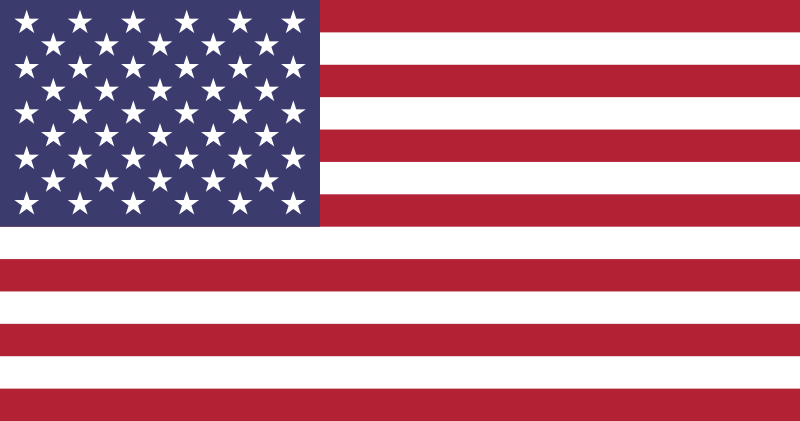
The formation of the flag of the United States of America would part from an evolution of the Catalan flag that the English took as a model for the British East Indian Company. Besides its design with red and white stripes, without precedents in England, curiously, the evolution of the number of stripes or paly coincides too ,as in the Catalan ensign, with the number of territories that would represent. From the five original territories (England, Scotland, Wales, Ireland and the American Colonies), as well as the different American patriots revolutionary flags that represented the number of colonies until the flag of the thirteen stripes (seven red and six white) of the thirteen foundational colonies that became independent from the British Crown. Though the number of stripes will remain unchanged from then, and they are the actual number, the increase in the number of States of the Union would be represented by the number of stars within the flag. Because of the red colour used, design of the stripes and their territorial meaning, the Catalan influence in the historical and iconographical reference appears evident in the origins of the formation of this flag.


Evolution from the Catalan ensign to the actual flag of the United States of America


But the presence of the Catalan stripes is not an exclusive fact of the National flag, other North American States and Puerto Rico reflect an original Catalan presence that has been usurped, tergiversated and converted in Castilian under the ambiguity of the name “Spanish”.


From the left, the flags of New Mexico and Arizona


Coat of arms of San German de Puerto Rico

The proliferation of Catalan ensigns because of the Catalan presence throughout the world, the ignorance and the oblivion about our nation is so great that there are anecdotes like this one, where a Catalan saw a Catalan flag hoisted by the entrance of a Museum in honour of the USS Constitution, in Boston, and the person who had ordered it, because they had seen it in a paint of the Battle of Tripoli, who had hoisted it every day, could give this man no explanation where that flag had come from. The visitor went away intrigued to know if our ancestors had to do anything with the first international naval battle of the United States of America. If you pay a little attention, is not difficult to find Catalan references in the American films and series.

Catalan contribution in the formation of a new nation

Precisely a sea man, Jordi Ferragut Mesquida, born in Ciutadella de Menorca during the British occupation of the island, who took nautical studies in Barcelona, left Catalonia and emigrated to the United States, where he worked in the Merchant Navy and fought the British in the American Independence War. In the Battle of Cowpens, it was highlighted that he saved the life of somebody called George Washington, one of the fathers of the Nation and who would become the first President of the United States. Jordi’s son, Jaume Ferragut, would be adopted by the future Captain of the Navy David Porter, who changed his name to David Farragut, would become the first major officer of the Navy during the Civil War and was the first counter-admiral, first vice-admiral and first admiral of the US Navy. The name of Farragut is today one of the symbols of America i bear his name several military academies, schools, towns, squares and streets, monuments and appears in diverse manifestations of popular culture, as the fleet of spaceships Farragut in the Star Trek series, or the Commodore Farragut in the novel “20000 leagues under the sea” by Jules Verne. Minorcan’s immigration to Florida within that time was not punctual, even today, their descendents surprise and thrill us seeing that they keep some of the customs, preserving Catalan vocabulary and now, thanks to internet, the blog The Minorcan Factor or Minorcanculture, among some of them.

But Catalan presence in North America did not begin in the 18th Century with Minorcan immigrants or figures like Gaspar de Portolà and Fra Juníper Serra, it is shown evident from the beginning of the Catalan landing in the continent at the end of the 15th Century, with Colom and other Catalans like Joan and Sebastià Cabot in Terra Nova.

The very name of Florida would be a Catalan name too, given by Joan Pons d’Agramunt –later converted by the censorship in a Castilian called Juan Ponce de León. Intuitively, it is perceived the Catalan origin of names like California, Pensacola –from our Peniscola-, and so many others.


Catalan place names in the United States: Barcelona Harbour, València, Farragut, Juniper Serra Mountain, Montserrat, Cabot, Porter, Coloma, Montfort, Pineda, Ponset, etc...

The name of the Nation and the political structure

Like the old Catalonia, the United States of America are formed, like everybody knows and like their own name indicates, by a series of States with their own laws. The North American federal culture is expressed by a national coat of arms with the legend “Pluribus unum”, the unity in plurality. It is common too, the county as a local or regional government form, as well as it was in the Principality of Catalonia. Equally, besides the States, the Federal District, which lays besides of the dependence of any other State member. It is known as Washington DC because of the name of the city that constitutes the district, the official name of this singular territory that exercises as capital of the Nation is District of Columbia, hence the initials DC.


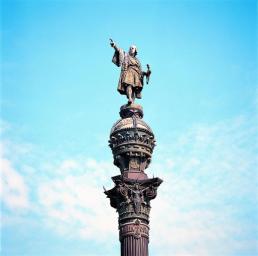
Like in Catalonia, too, the Americans have had their discrepancies with regards to the name of the Nation. Precisely, the denomination of the capital district answers to the remaining of what, at the time, was proposed as the name of the whole Country: Columbia. Explained in the Wikipedia, Columbia was the first popular and poetic name of the United States of America and is a grammatical feminine form derived from the name Cristofor Colom. The denomination dates from before the Independence War in 1776, but was forgotten in the 20th Century. The Americans appealed to the figure of Colom instead of the figure of the Cabot brothers, promoted by the English.

George R. Stewart says that the name “United States” was criticised for too long, imprecise and slightly poetic, and said that the Constitutional Convention in 1787 would have been the perfect moment to change it. The two characters who probably had argued more for a better name, following Stewart, would be Thomas Jefferson and Benjamin Franklin. However, the Nation kept the name of “United States” although the popular support for “Columbia” remained. Finally, the establishment of a new independent country with the name of Colombia had provoked that the denomination “Columbia” was not longer available for the United States, therefore their progressive abandonment. In spite of that, the name “Columbia” appears constantly in North America and even remains as the personalization of the Nation in feminine figure, equivalent to the masculine “uncle Sam”, normally associated to the President.

 
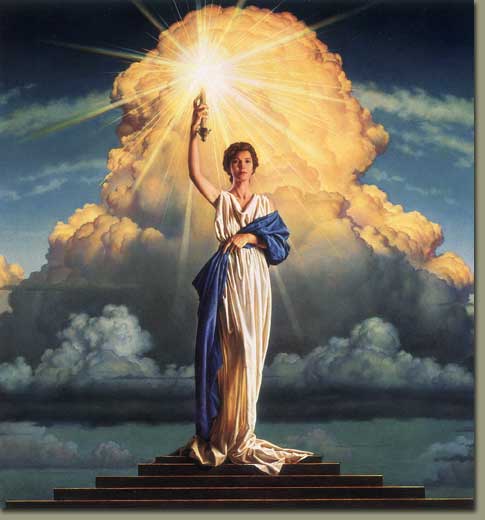
Columbia, the feminine representation of the United States of America, derived from Colom, is today symbol of Columbia Pictures. The United States and Catalonia in today’s world.


The United States have always looked out for our country in the moments where new independent States have been born in the old Europe. The return of Catalonia to the international political arena is seen with good eyes by  America, which need to have strategic associates in the western Mediterranean, with European States dedicating their efforts to improve their economies, and not managing internal territorial problems. But from Catalonia, we have not understood nor correspond adequately the possibilities that the international chequer offers to us.

Yet with President Wilson, the regionalist Catalan politicians at the beginning of the 20th Century missed asking him for support for having an Autonomy, that he declined for being and “internal affair” with the Spanish State, instead of asking directly for independence, in a moment where the independences of Poland, Czechoslovakia, Hungary or Ireland were facilitated. During the 2nd World War, too, existed a project to make, at least the Principality, an independent State to facilitate the Allied offensive against Fascism in Europe, that finally was not approved. More recently, President Clinton affirmed that “future will be either Catalan or Taliban. In a Catalan world, we would celebrate the differences, because they are a manifestation of the common Humanity. In a Taliban world, the differences are the only thing that matters”.

Events like September 11th 2001, unite one more time America with our own September 11th 1714 and increases the long list of shared symbols, even though Spain has tried to hide and usurp them. Now, the United States are to begin a new era with a new President, it is interesting to see how the American Democrats have adapted the Catalan donkey as the sign of their party. Democrats Abroad have bought copyright to the proprietor of said donkey to use it as the official sign in the campaign of Barack Obama to the American Democrats overseas. And from the Republican benches, Robert Kagan, John McCain’s assessor in international politics, referred to the supporters for independence of Catalonia and other European countries in a press article. Nobody was surprised that with the actual American President, we have another opportunity to see an independent Catalonia among the other European nations. But to do so, Catalans must have especially present this paragraph of the Declaration of Independence of the United States: “But when a long train of abuses and usurpations, pursuing invariably the same Object evinces a design to reduce them under absolute Despotism, it is their right, it is their duty, to throw off such Government, and to provide new Guards for their future security”.

Published at “Es Poblat d’en Talaiotic”

What we must do now

When most visible becomes our collective condition of submission, some of our compatriots inclined to demoralize would like to throw in the towel. This state of mind is not only due to our inexistent trust in our leadership –we are unable to see them giving us a victory as a nation-, but combined with the most diffused voices within the public opinion, which are constantly generating a perception that Spain is winning the battle. In addition to that, the occupiers publish what they loot in form of fiscal balances and it does not happen anything.

Among our most representative people, all are laments and calls to resistance, and the formulae to escape from them are always the same: to stay put, to use the little we have and pray to the Virgin of Montserrat. No one of our main opinion makers of the country is going  beyond describing the adverse effects of the viruses called Spain and France. We lack so much in patriotic gestures that there have even been who has seen Jose Montilla’s last attitudes in the financial theme some reincarnation of Pau Claris. A victory can never be built on these foundations. Hence, what must be done? To continue with the same old unsuccessful attitudes or to have the audacity to begin walking through new pathways?

There will be who believes that there is no life beyond new political parties with representation in the Parliament. Most of these think that everything has to go through the sieve of Esquerra Republicana de Catalunya or Convergencia i Unio, and they limit themselves to force “one step beyond” the main leaders of these formations. We have been so many years without having political parties that we think that maintaining the actual ones is our least harm. But reality says that this way of seeing things has consolidated a harmful ruling of the actual political parties that has smeared all with subsidies, dropping their pants down in front of the government of Madrid and make all kind of buttering up to the great communication or economic groups. It is not strange, then, that the beginning of a sensation that who is really in power within the Principality of Catalonia are some people with office at the top floor of some emblematic buildings in the city of Barcelona.

However, I reckon that seeing the last Congresses of the two parties self-called of exclusive Catalan subjection –what a sarcasm!- it does not invite to a lot of optimism. Seeing their results and confirming that the sensation that the end of an era has arrived it is the same thing. Their principal leaders would like to lengthen to the infinite the era of blurriness, but the people with clear Catalan national awareness is fed up with waiting and want something happening. They are neither willing to wait another ERC congress in June nor they believe the euphemisms that came out in the last conclave of CiU. Patriotic people want clarity because they consider exhausted the times of fuzziness. Ambiguity would work in other times and being the essence of one political party. This characteristic has even become one of the polling clues to govern Catalonia for twenty-three years. What has remained? A profound deception and the sensation that they have eaten some ground. This is how the promoters of this politics have acted, what can we expect from their political offsprings?

For all this, the idea of a new political formation that embodies a real, authentic, modern and operative support for independence is taking shape. With faces and styles without any connexion with thirty years of abandoning own principles. Possibly, this feeling is produced at the moment in small cores but is spreading quickly, and without any doubt is combined with the incompetency of the actual leadership of the country and the colonial treatment that Spain is brooded about visualize constantly. However, who will thread the needle?
From Catalunya Acció, we shall never tire to repeat this necessary convulsion in our politic arena. Even more, we shall not remain here. We shall do everything possible to become one of the foremost makers shaping this new hope that every day claim more Catalan patriots.

Santiago Espot 
CEO Catalunya Acció
(Article published at El Punt, 10-10-08)

Sunday, 11 October 2009

Charles Merrill, Christopher Columbus and Jordi Bilbeny

Almost a year after its publication in the States, it arrives, with perfect aiming, the translation into Catalan of Charles Merrill's book Colom of Catalonia: origins of Christopher Columbus revealed. It is a matter of the book in which he follows the information published until now, makes an estate of the question, compiles everything new might be and extracts a conclusion. And what is this conclusion? That Bilbeny was right. But not only Bilbeny, because, in reality it is a part of a tradition that begins with Peruvian Historian Luis Ulloa. And is good that the book appears now that October 12th is so near.

I encourage you to use your blogs to speak about the book, the monstrosity of the historical appropriation and Charles Merrill and Jordi Bilbeny. It would not be bad you also link the web of the Institut Nova Historia, the foundation that accommodates Jordi Bilbeny and his team. It is a very good moment to decide to become a member and help, this way, to develop these investigation even more. At the Institute, a lot of investigation and diffusion work is being done to revise History.

The book appears in a moment in which Spain does not stop receiving blows and disappointments. They will not host the Olympic Games in 2016; everybody comments that they are the only ones to come down from the economical recovery; now, President Zapatero sees how the polls are turning against him; Catalans have made explode a democratic earthquake with epicentre in Arenys de Munt; and, for afters, it reappears, with a more than oportunistic translation, a topic that they would like to have dead and buried when the book was publised last year. It is not that I feel a special pleasure in poking in the wounds of the others. I do not consider myself especially sadistic. But I do not feel sorrow for them, to be honest. So, if you would like to broaden your knowledge, there are the books by Caius Parellada, Teresa Barque, and so. But especially Bilbeny's Cristòfor Colom, Príncep de Catalunya, published by Proa.

Xavier Mir