Showing posts with label Catalan symbols. Show all posts

Tuesday, 29 September 2009

The name of the Nation (II): Evolution and diversity of denominations

In the last article of this series, I presented the former union or group of countries under the sovereignty of the House of Barcelona and its political structure as origins of federalism, supposing the initial application of the denomination “Catalunya” to that union.

The original denomination: Catalonia

This typical Catalan conception might be the generalized usage, albeit not the only one, because there was no official name as we define it today to refer to that group of territories.

Perhaps at the very beginning the name of “Catalonia” was used to the whole Union because the inhabitants of the Counties of the House of Barcelona might not have any identity connotation, and so it could be applied to Aragon as another possession of the Sovereign. But surely, that denomination was identified as something different by the Aragonese and they did not accept it, hence there is not a single official denomination to the whole of the Crown.

While the Mediterranean countries knew perfectly the territories of the Monarchy as Catalonia –and in this case would be known as the actual Catalan Countries-, it was not rare that Aragonese, Castilian or Hispanic in general without that political culture would call it simply “Aragon”, giving importance to only one territory of the Union, the closest and the one that possessed the title of Kingdom in front of the County of Barcelona.

These contradictions and divergences are not more than another element of the incompatibility of the political culture between Catalans and Spaniards. In fact, the communal existence of the denominations “Catalonia” and “Aragon” within the Chronicles, makes very difficult to know if they are talking about the Principality, the Kingdom of Aragon or the whole Union. What is sure, though, is that in the Chronicles, like Muntaner’s, the term “Catalan” is common in front of the term “Aragonese” to refer to the inhabitants of the different territories.

Some other clear examples, amongst a lot more others, where the denomination “Catalonia” and its derivatives appears to refer to the different territories of the House of Barcelona, its given by Benplantat in his web:

-The Juries at Palermo (Sicily) wrote “Regnum Cathaloniae” when referring to the General Court of Caspe (Aragon).

-Edward III (England) “Mercatores fifeles de partibus Ispaniae, Catalonie et Majoricam”. Majorca was independent in 1340.

-Peter the Great called himself “Heres Cataloniae”, meaning he was the heir of all Kingdoms.

-King James II, in a letter to the Dux of Venice: “…partibus imperi Constantinopolis in Sicilia et Cataloniae”, where the expression Catalonia refers to all Iberian territories.

-King Ferdinand II differentiates between subject traders as “consuli mercatorum tam catalanorum quan castellanorum” (market trades so Catalans as Castilian).

-In the same Constitutions, Vol.I 1292, it says that is not possible to separate the Kingdom of Majorca from the Counties of the North with denomination Catalonia and Kingdom of Aragon, Valencia and Counties of Barcelona, “dominatione Catalonie e dictorum regnorum Aragonum, Valentie et Comitatus Barchinone”. It is clear that the name of these Kingdoms is Catalonia.

Other references:

-1365: the representatives of Majorca wrote to King Peter the Cerimonious, “as Majorcans and populates of that island were Catalan naturals, and that Kingdom was part of Catalonia”.

-1392: Valencian governors addressed to Majorca and complain of the insecurity at sea: “Where is the vigour of the Catalan Nation, that made payable all the surrounding Nations”.

-Vicent Ferrer calls “Catalonia” the Catalan speaking part of Valencia, while he preached in the region of Serrans (Aragonese speaking): “You of the Serrania, who are between Castile and Catalonia, and so take a Castilian word and another Catalan”.

-In the Catalan Civil War (1462-72), Minorca took sides for the Generalitat against the Trastamara’s John II, father of Ferdinand the Catholic. The commotion started in Ciutadella with the chant “Visca Catalunya!”.

Catalonia as a political concept encompassing a diverse Kingdoms and territories was a comparable denomination to what Spain would be in later centuries. The same way that Charles I was known as “King of Spain” without existing any Kingdom with such name, but a set of inherited Kingdoms –almost all them from the old Catalonia, neither Catalan Crown, because no kingdom with such denomination ever existed. The King, though, could receive the treatment “King of Catalonia”, as it is written in the Chronicle of Pere Marsili, 14th Century AD, where they call James I as follows:

"Capitol XXXVII

Lo maestre del Espital per nom Huch de Fuyalalquer ab XV cavalers frares del seu orde, lo qual lo rey havia char e amich especial, e l'havia fet fer maestre en lo regne e en las suas terras per lo maestre major del dit orde, vench al rey de Cathalunya, e demaná sol parlar ab lo rey en presencia dels companyons, e dix: Senyor, pus Deus ha feta la vostra via ó carrera tant be estruga e bona, pregam la vostra pietat que acabets á nos ab los nobles e prelats que el nostre orde haja alcuna rosa en Malorcha".

There are other denominations in use with reference to the King of Aragon, that was the official title of only one of the territories, used preferably to simplify and because it was the title that was superior in hierarchy –king in front of count- and seniority –Aragon before Valencia, Majorca, etc-, to refer to the sovereigns of the House of Barcelona.

-William de Baux, prince of Orange “… to the Emperor of Barcelona”, 1210.

-Marcabru; “Avec l'aide de Portugal et de Navarre e pourvú que l'emperateur de Barcelone", 1261.

15th and 16th Centuries AD: From Catalonia to Spain and the Crown of Aragon. The use of the term “Catalan Nation”

From the Compromise of Caspe (1412) and the enthronization of the dynasty of the Trastamara, Castilian, and the incorporation of more peninsular Kingdoms, like Navarre, Castile and Granada as new partners in the Union, the name of Catalonia as referent was being substituted by Spain, an initially geographical denomination that pretended to facilitate the integration of the new territories joined to the Monarchy of Catalan origins. King Ferdinand II talked of the “Spains” whereas his wife dona Isabella talked only about Castile. This change, from Catalonia to Spain, was not due by imposition of our sovereigns but had to be readily accepted due to the Catalan pre-eminence within the new Crown and as a symbol of our domain. The same adjective “espanol”, with suffix –ol is from Catalan origin. That Spain was an increased Catalonia with new territories and Barcelona as Imperial city where the Crown expanded to the New World, with Our Lady of Montserrat as Saint patron and with a culture that gave works like “Tirant lo Blanc”, “El Llàtzer de Tormos” or “La Celestina” from the Kingdom of Valenca. A rather different Castilian Spain of today, with centre in Madrid and which have been made us believe that existed since the Big Bang.
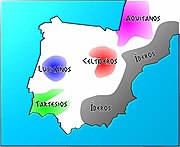
The denomination “Spain”, originated from “Hispania”, started politically from Catalonia in the Iberian era and in the 15th and 16th Centuries AD with the beginning of a new power –Rome in one case, a dynasty of foreign origin in the other- in our territory. In both periods, the power extended throughout the peninsula and became hostile to the reality of the autochthon Iberian or Catalan population.

But as we know, from Castile, in the same way that happened before with Aragon, did not want to see their incorporation to Catalonia -or Spain- in the same way that to our Nation, and they prefer to sell their “tanto monta, monta tanto” as a political conception of union of two crowns, theirs and Aragon, never Catalonia! Effectively, the name “Crown of Aragon” began at that time and in 1493 the old “Consell Reial” –Royal Council- was transformed into the “Consell d’Aragó” –Aragonese Council-. And naturally, the name “Crown of Aragon” was imposed by the revisionists when Catalonia was governed from Castile and in Castilian way during the 16th Century.

This is the vistion that has been imposed by Spain and that is observed today as “Crown of Aragon” or even worse, “Kingdom of Aragon”, which is what is learnt by Catalans and the rest of the world as the only certain and valid History, like they say that Catalan Kings were Aragonese, that the Catalan flag was Aragonese and that Catalan conquests in the Mediterranean were Aragonese –and exclusively Castilian were the territories in the Atlantic, something absolutely false-. Burying their Catalanism under a few layers of confusion, which pretends to exclude and erase us from the past.

The transformation of the political subject of what Catalonia was within Spain by their sovereigns, with the territorial enlargement in the Iberian peninsula and the application of the name of “Crown of Aragon” to the former Kingdoms would make the Principality become the only territory where the denomination “Catalonia” would apply, in spite of the name “County of Barcelona”. Consequently, inheriting the concept of “Catalan identity” which will be more difficult to maintain in the rest of the nation. In this context, the term Catalan Nation, used long before then, becomes the natural substitute of the term “Catalonia” to refer to the territories of the Monarchy inhabited by Catalans, in front of the official use that was made of “Catalonia”, limited to the Principality and not only to the whole of the territories of the King.

Document of 1444 by the Councillors of Barcelona where “Catalan Nation” is differentiated from “other subjects” of the Prince King.

Naturally, these changes are happening slowly and diffusely, because in the 16th Century we still can observe maps where the denomination “Catalunya” is still attributed to the original territories inhabited by Catalans. Evidently, is simpler to find these references in other countries than in Catalonia, where the Spanish censorship was already working fully. Please observe these two centuries:

Map of 1505 by Andrea Benicasa, preserved at the Vatican Apostolic Library. The denomination that appears in this map is still “Catalonia”, not “Aragon” or “Crown of Aragon”.

Map of 1540 by Battista Agnese. The names that appear are “Catalonia” in one side and “Ispania” on the other, apart from “Regnu Granate”. Do not appear “Castilian Kingdom”, nor “Portugal” that seem to be incorporated to the generic “Ispania”. Neither “Kingdom of Aragon”, “Valencia” nor “County of Barcelona”, included in the generic “Catalonia”.

Map by Americh Despuig (officially known as Amerigo Vespucci), where the name of the Nation is “Regnu Tarraconie et Catelonie”. The denomination “Kingdom of Aragon” is nowhere to be found.

In Naples, the Kings successors to Alfonso the Magnanimous, where treated by the Angevin Party as “Catalans” –“Sto catalano quante ne fa!”, said about Ferdinand I of Naples-.

In Castile, the very King Ferdinand the Catholic was known disrespectfully know as “old Catalan” and “catalanote”.

1554: M. Bandello. Novelle I: "Valenza, gentile e nobilissima, che in tutta Catalogna non è piu lasciva e amorosa città."

The qualification of “Catalans” is known to be given to the Popes of the Borja family, originally from Xativa, by the contemporary Italians -"O Dio, la Chiesa Romana in mani dei catalani"- but even by themselves: Calixtus III was known as “papa catalanus” and considered his pontificate as “gloria nationis catalanae”.

Also from that time, allusions to Catalonia as a Kingdom by Catalanist manipulators like Ferran Colom, son of the Discoverer, and Joan Miquel Servent, the writer. The first, calls “Kingdom of Catalonia” the old Principality, and the latter talks about the Kingdom but also the “viceroyalty of Barcelona”, so that gives the impression that there are diverse viceroyalties, Barcelona amongst them.

From suppression of the Catalan institutions to the destruction of territoriality

As it is known, the loss of the Succession war in the 18th Century AD meant the elimination of the institutions of the different Kingdoms of Catalonia, but the territorial conception does not change in great deal with regards the previous two centuries. The old territories of the Principality of Catalonia, the Kingdom of Valencia, and Majorca preserve their denominations even though their own institutions are not maintained and they depend directly from Castile.

It is with the division in provinces in the 19th Century where a new substantial conceptual change of our territories within Spain takes place. With this model, the conception of unity among the Catalan territories aside to Spain –that was already very precarious- is destroyed, and also the unity of each one of the historical territories, now divided in provinces. Now, the denomination Catalunya completely disappears, as also did Aragon or even Castile itself. The old Principality was divided basically in four provinces –the Western Strip, disputed with Aragon for many centuries, was included and spread within the three Aragonese provinces-, the Kingdom of Valencia was divided in three and the Kingdom of Majorca was initially converted in the province of Majorca and later in the Balearic Islands. The new administrative system, of French inspiration, would only admit one Spanish national reference, with clear Castilian base.

These trials of disintegration and destructuralization of the Catalan territories would go a higher level with projects that did never become real and which pretended to separate the South of the old Kingdom of Valencia from the rest of the territory, in a zone that would include Albacete, Murcia and Alicante, while the territory of Lleida was meant to be grouped with the Aragonese province of Huesca.

This way, we have Catalonia, that, from being the denomination of a whole of the territories was the official denomination of one of those that formed part of the Union, to finally disappear.

Beginning to revert the process

With the First Spanish Republic, only lasting a few months, the name “Catalunya” was recovered as denomination of one of the federate States projected, corresponding to the old Principality, and it would not be until the “Mancomunity”, beginning of the 20th Century, that an administrative organ was created, as a simple group of four Spanish provinces, suppressed with the Primo de Rivera’s dictatorship. The name Catalonia was restored with the Second Spanish Republic in the form of autonomous government as a substitute of Catalan Republic. This autonomy was equally suppressed by the Francoist dictatorship and being restored again within an autonomous regime that put back the Principality, the Valencian Country and the Balearic Islands in charge of a minimal self management in the internal maps of the Castilian State, in company with and diluted at the same level of new autonomies within the Castilian nation like Madrid, the two Castiles, Rioja, Cantabria…

During all these centuries of Spanish distortion and with clear destructive will of our Nation, uninterruptedly have shown, throughout the territory, voices and references to the universal Catalanism of the Pricipality, Valencian Country and Balearic and Pine Islands, that more or less clearly due to clandestinity have arised. The question of the name of the Nation still reappears today, intermittently, to remind us that we have an unresolved question: recover the power to redefine us without the interference from whom question our existence as a Nation.

We must begin the recovery, without euphemisms, of the denomination of the old territories of the House of Barcelona, especially the Catalan speaking ones, as a minimal historical denomination. Aragonese Crown is not valid, and even less is Kingdom of Aragon, that would not be a denomination used by neither our Monarchs nor the Chroniclers, until it was created and imposed by the new Spanish powers in the 16th, 17th and 18th Centuries. Neither valid are other modern euphemisms like Catalano-Aragonese Crown, never used in that era which, more than reflect the reality, repeats the Spanish concept. Catalonia is a historical name that our Nation applied to the diverse territories, perfectly documented and real during the 12th, 13th, 14th and 15th Centuries, no matter that some have wanted to bury it.

Published at “Es Poblat de’n Talaiotic”

Wednesday, 23 September 2009

The name of the Nation (I): Origins of federalism

Treating the question of the name of our nation, the evolution of the denominations that are applied on the whole of the territories populated by Catalans, and our own political structure is something I wanted to talk about for a long time and some comments of readers on this blog have claimed, in more than one occasion, especially as I am used to call the actual “Autonomous Community of Catalonia” with the name of “Principat”.

In the article “El misteri de la paraula Catalunya” –“The mistery of the word Catalonia”-, published last year, I introduced the possibility that the old concept of “Cathalunya” meant “Union of Countries”, a name empty of identity meaning from the very beginning and would designate the whole of the Counties that grouped together around the County of Barcelona. In another article, “Bars in the wind” we can see how the golden bars or paly of our flag would mean each one of the territories that, at each time, were under the sovereignty of the House of Barcelona. In this article and the following of this series I shall give my opinion of the conception and political structure of the Catalan Nation and explain how the denomination “Catalunya” is lost to end up to being the official name of only a part of the territories that formed part of such union.

Political structure of the Catalan Nation: The Principality and the Kingdoms of Catalonia

As it is known, the initial Counties that were formed in the Southern border of the Carolingian Empire were ruled by a Count, from which, the Count of Barcelona appeared to be head.

The Count of Barcelona would be therefore, the first among equals or –primus inter pares- of the other Counts, later in time they all belonged to the Count of Barcelona. This function of being the first among equals would give the House of Barcelona the federal political culture that characterized the territorial structure of their dominies.

The Count Ramon Berenguer IV of Barcelona, at the age of 23, betrothed Princess Petronila of Aragon, a little girl of one year old –although the wedding did not celebrate until a few years later in Lleida, in 1150. From that day, the Kingdom of Aragon –that only occupied a similar territory of what today is the province of Huesca-, that was in great difficulties and to which Castilians and Navarrese had pretensions of, was incorporated to the House of Barcelona, and the “Counts” acquired the title of “Kings” that would exercise for Aragon but kept the title of Count of Barcelona.

The Counts of Barcelona and the Kings of Aragon would be Princes, not in the sense of being the son of the King or heir to the title, because the title of the heir of that crown was “Prince of Girona”, but in the sense of exercise the sovereignty over a number of territories and the “first citizen” with the meaning given in the Roman Empire to preserve their Republican conception.
Found in the Wikipedia, one of the meanings of “Principality” is precisely, “territory where the sovereign has not any specific title or exercises in order of other title”. Therefore, in this number of Counties, we are talking about a Principatus in the Latin sense of sovereignty and was maintained without the category of Kingdom that was given to other territories later joined to the House of Barcelona: Aragon, Valencia, Majorcas, Sicily, etc.

This is when it arises the following question: why did not the Count of Barcelona proclaim as King of Barcelona and the Kingdom of Barcelona was created, as Aragon, Valencia and Majorcas? Why was a territory surrounded by Kingdoms kept that way without “elevating” it to that category? My opinion was that it was never proclaimed as Kingdom of Barcelona due to very diverse reasons i.e. initially, it would not be interesting for the other Counts and institutions to lose power –that they could apply being a Count- in front of a King, for the all time reluctance of the Church in front of the House of Barcelona and finally, but probably most important, they did not need to change a situation that worked well. Contrarily to what one think, the fact of not being a Kingdom might had been beneficial to Barcelona and the Principality because of the equilibrium of powers amongst the Catalan Crown.

The territorialization of the concept of “first among equals” and “Prince” that fell to the Count of Barcelona, implied a County of Barcelona that became “first among equals” in front of the rest of Counties and a “Principality” that, not being formally a Kingdom, was very similar and the first among the Kingdoms of the Crown, because it was the origin, the head and housed the Dynasty of Barcelona, that had created a Monarchy with its territories, each one with their laws and own institutions. With the function of “first among equals” of the Principality, the following Republican versions of Catalan Federalism that were imitated by other Nations, the “first among equals” principle would be represented by the Federal District, a territory with the same category that exercises as Capital of the Federation.

As this model has been imitated in this precise and concrete way, it must be that was right. Effectively, each Kingdom had to have a viceroy who represented the King in that territory, while each modern State of a Federation has its Governor or similar figure. The Federal District, though, is under the direct jurisdiction of the Government of the whole Federation, as Mexico DF, and its government presents some peculiarities with regards to election and naming of the Governors of the State members.

Exactly the same as the case of the Principality of Catalonia, that could not have viceroy because it was not a Kingdom and remained under direct rule of the Count-King, only in case of his absence, a Lieutenant was named as a representative.

The need of a Federal District is justified with the objective of avoiding the influence of particular interests of any member State over the territory, in the same way that was not interesting a Kingdom of Barcelona that might create conflicts between the Viceroy of Barcelona and the rest of Viceroys, whereas it was not possible between the Viceroys and the King in person. A question that still affects the Principality, where everybody seems to have the right to decide about what has to happen or to decide in questions like water, the Royal Archives of Barcelona –ill named “Crown of Aragon”-, infrastructures, finances.

Moreover, the paper of the Catalan Court has to be present. They represented a limitation of the power of the Count-King unedited to other Nations, where Catalan Constitutions were approved and other territories of the Union like Sardinia and Sicily claimed rights to send representatives to, likewise the Kingdom of Majorca. The paper of the Principality of Catalonia that was exercised by the Counties headed by Barcelona, is understood, like a feudal and primitive form of Federal District of Catalonia, and might had the particularity of being an authentic federation –union of counties- inside a bigger federation that was Catalonia.

In the same way that the City of Majorca takes its name from the island and Kingdom where it stands, like the City of Valencia and gives name to the Kingdom capital of , like Mexico DF takes the name of United States of Mexico and the City is their capital. The Principality of Catalonia takes the name of Catalonia from the Union of Countries that were in its own origin, from which was part of and was the first among equals.

The territories of the “Union of Countries” or Catalonia

The old Catalonia formed by the Principality and the rest of the Kingdoms.

It must be highlighted that the shape of the Principality, that exercised similarly to what today we know as a Federal District, is similar to the Iberian peninsular Catalonia at smaller scale. The expansion of federalism To describe the spirit of Catalan federalism, it is very useful the example in Ramon Muntaner’s Chronicle about “the bush of reed”, referred in its context to the Unity between the King Alfonso of Aragon (Valencia, Sardinia, Count of Barcelona and Urgell) and the Kings of Majorca (then reigned by James III of Majorca) and Sicily (then reigned by Frederick II, younger brother of James II of Barcelona), monarchs who carried his signal: –translated- “And nobody asked me: Muntaner, what’s the example of the bush of reed: has that strength that, if all the bush is tied by a rope, and you want to pull it out together, tell you that ten men, no matter how they pull, they will not pull it out, and even more they try: and if they leave the rope, branch by branch, an eight year-old will break it, that not even a bush will remain. And it would be like these three Kings, that if among them there is division or disagreement, God did not want that, we count that the neighbours would like to consummate them, one with each other. Because it is necessary that they guard against this step: while all three are one, they do not fear other power in the World, and this way, as I told you, will be all time sovereigns to their enemies”.

From this paragraph we must highlight the vision of Kingdoms that formed the dominies of the branches of the House of Barcelona and that implied the union of these territories even if they had different Kings, and that our neighbours do not wish more that see us divided and confronted to conquest us. The expansion of the Catalan State, first with the Spains, incorporating Navarre, Castile and Granada to the Crown and the with America, implied that the Catalan political model acquired Worldwide scale.

The Wikipedia says that the word federation comes from the latin “foedus” meaning covenant. And is convening an original characteristic of our political and juridical culture, that is reflected in the territorial and institutional structure of the State, opposed to unitary and unitarian States. Moreover, if Catalonia meant originally Union of Countries, it could be said that the actual term “federal” and the original “Catalan” not referred to a specific identity were equivalent. The explanation that is traditionally offered of our political structure is of a personal union or confederation. But the differences that exist between both systems are of hue or tradition.

Personal unions are more typical of Monarchies and would apply in our case, confederations and federations would be the normal evolution of republics. The degree of union among the State members, the power of the Central Government and the right of secession of the parts make the limits between federal and confederal states was very blurred and more theoretical than real.

Nowadays, Federal or Confederal States are the majority of the countries of the American continent, from Canada (a Federal Constitutional Monarchy with the Queen of England as Head of State) to the Argentinean Republic. From whom did they learn this system? From unitarian Castile, France or England, evidently not. Only Catalan political tradition could be the model. In Europe, we have Germany, Switzerland, Austria, Bosnia-Herzegovina, Belgium and Russia. Other countries in the world that have adopted this political structure are Australia, India, Pakistan, Iraq and Sudan. And other States worldwide tend to federate amongst equals in continental organizations like the European Union.

It is curious that the Catalan Nation, the origin and the introductory of this system, is today cancelled, divided and quartered between two unitarian States; France and Spain, waiting to reappear from its ashes and be able to make new contributions to Humanity. And I do not stop saying the quote by Francesc Pujols at the House-Museum Dali in Figueres: “Catalan thinking always shoots out and survives to its dreamer gravediggers”.

Map of the actual federal and confederal countries. Countries with a genuine Catalan political form.

From “Es Poblat de’n Talaiotic”.

Friday, 18 September 2009

Bars in the wind

With occasion of the Day of the People of Minorca, on which we commemorate the incorporation of the island to the Catalan Crown, on January 17th 1287, I have remembered that a year ago, there was an intense debate at illencs.com, on Pau Gener’s blog Sa tanca de s’era with occasion of an article where there was not even a flag. Because of this, I thought that it would not be bad to revise the possible origin and meaning of our flag, ensign or standard or how you would like to call this National symbol.

To begin with, do not believe that I shall start with the legend of Wilfred the Hairy, marking with his four bloody fingers on a golden shield what it was the emblem of the Counts of Barcelona, but before then and examining this Iberian statue from the 5th Century bC, marked too with the four bars.

imageimageimage

Iberian statue and some representations of the territory occupied by the Iberians

What could represent the four paly that you can see in this Iberian figure? It results curious to verify that the actual Catalan Countries coincides in great part with the territories populated by the ancient Iberians, from the Northern Pyrenees to Granada, for all the Mediterranean coast, following the maps. We are, then, a Nation with roots that go into the ages a long time before the arrival of the Romans.

To start by the hypothesis that relate Iberians with Jews, it must be mentioned that following the Cabalists, the origin of the four paly of the Catalan flag is the four letters of the name of God in Hebrew, what is known as the tetragrammaton:

The Tetragramme are the four letters of the name of God. In Hebrew there are no vowels, thus the name Jahve or Jehova is written YHVH. The tetragrammaton bears a concept of God, or better said, the Creator of everything visible or invisible –something not perceivable by the sight, smell, taste and tact. The name YHVH is a term that defines and regulates the creation process. One process that, at the same time, is marked by four phases: plough, sow, collect and elaborate. As well, sow, germinate, grow, flourish. There is one time for every thing. The creation process has four phases.

These four letters or energies make reference to the four elements of the Creation: Air, Water, Earth and Fire. There is a reference to the Cardinal points: North, South, East and West, that frame all that we call space. The four seasons of the year, Spring, Summer, Autumn and Winter, the four basic foods to keep life…

The Cabalists do never pronounce the name of God for respect and never wrote the four sacred letters that are the expression of the name of God. What they did was to represent the sacred name, the Tetragrammaton with a sign. The name “tetragrammaton” comes from the Greek “tetra” that means four and “gramma” that means graphic or line. These four lines had a colour related with the letters YHVH; this was red on golden background. Therefore, the signal that represents God for the Cabalists, or the Tetragrammaton, is the four red paly on golden background.

image

image

It is logical to think that the symbolism of these symbols has something to do with the Kabala, and with the Tetragrammaton in particular, due to the study of the Kabala being introduced in the 11th Century AD in Catalano-Provençal lands.

In fact, this representation, known as the ensign or “senyera” is the emblem of Catalonia and Provence. If we add the idea of that the 4 paly represent the name of God to the theories about the origins of the lineage of Wilfred the Hairy, the genealogical tree of whom would take us to the same Jesus Christ and the Exilarchs of Babylon and the Kings of Judah, we would have the dynasty of the House of Barcelona with Catalan Counts and Kings as heirs from the royal blood of Jesus Christ, and carriers of the name of the Lord in their royal sign. A very big provocation and a threat to the Roman Catholic Church and their version of the Son of God’s life as per their official Gospels (by the way, four) and that would explain the support of the French King given by Rome in his invasion of Occitania and the integration of the Castilian dynasty of the Trastamara to the Catalan Crown at the Caspe Compromise of 1412. Naturally, this hypothesis about the royal blood of Jesus Christ so popular nowadays in books and cinemas are always presented under the French point of view, hiding the Catalano-Provençal context of this story.

But let’s continue with the symbolism of the four paly. Jordi Salat presents the meaning of the four columns. Salat says that these four columns measured “two meters diameter and twenty meters high crowned by a ionic capital, erected in 1919 at the Mountain of Montjuic by the architect Josep Puig i Cadafalch (1867-1956) and were demolished in 1928 by General Miguel Primo de Rivera because they were a Catalan national and cultural symbol related to the Hellenic culture, comparing, in a certain way, the Mountain of Montjuic of Barcelona with the Mount Olympus in Athens”. To Jordi Salat, these columns, that must be restored, represent a distorted, forbidden and hidden History that is founded in the vernacularism that joins the universality that we must rediscover, and relates these four columns with the Tetragramma and the four elements.

image

Perspective of the four columns in front of the Palau Nacional (National Palace), initially called El Palau de l’Antic Saber (the Palace of the Ancient Knowledge) with the four red and five yellow rays.

image

Different perspectives of the Four Columns of Puig i Cadafalch at Montjuic, with a virtual reconstruction behind the actual fountain. Bottom right, demolishing of the Columns during the Primo de Rivera’s dictatorship.

Naturally, the strength of all this universal symbolism does not please a lot of people who, after more than 30 years of democracy still hinder the restitution of these columns and more of all Hellenic architectonic group that Puig i Cadafalch had in mind.

Besides its symbolism, the four paly might have acquired a practical functionality, becoming the standard of the Catalan Counts and Kings. The diversity in the number of paly found, following the History of the flag of the Catalan Countries, and collected in the article Royal ensign (Wikipaedia), would not be arbitrary, but they might have had the function of indicating the number of States that were under the sovereignty of the House of Barcelona.

What is most surprising is that this possibility is possible if we interpret the ensign exactly inversely as we do it normally; it would not be the red paly over golden background but the golden paly over red background.

imageThree golden paly: Barcelona-Besalu-Provence, and later, Barcelona-Counties-Aragon and Barcelona-Aragon-Montpelier.

The three bars (golden) started their popularity and diffusion when Ramon Berenguer III the Great married Douce of Provence in 1112, and acquired all an extensive inheritance in Occitania. They attributed then the three golden bars to Barcelona, Besalu –that had been joined to the Crown the year before, 1111- and Provence. The existence of the three bars is testified by the stamps of Ramon Berenguer III.


imageFour golden bars: Barcelona-Aragon-Montpelier-Majorca

The conquest of Majorca began in 1228 and altered the three paly because, from a study in the stamps, it seems to be deduced that there were four bars since that time. However, we enter a period of confusion regarding the number of bars or paly because portolans, paints and other documents do not coincide, and flags with three bars appear with frequency, as well as five, seven and eight. In the paintings in the Palau d’Aguilar in Barcelona, dated at the end of the 13th Century, where the conquest of Majorca is represented, the flag appears with two, four, six and seven red bars and three, five, seven and eight yellow.

image

Five golden bars: Barcelona-Aragon-Montpelier-Majorca-Valencia.

With the conquest of the Kingdom of Valencia by James I, a new golden bar would have been added to the royal stamp. This ensign of five golden bars is the one that implies the presence of four red bars.


image

Return to the three golden bars: Barcelona-Aragon-Valencia to Peter II and Majorca-Roussillon-Montpelier to James II, due to the partition of the territories between the two sons of James I the Conqueror.

At James I’s death, the Kingdoms were divided between his two sons: the eldest, Peter II the Great received the central core, with the dynastical capital of Barcelona and the adjacent Kingdoms of Aragon and Valencia. The second son, James II, received the Kingdom of Majorca, the Counties of Cerdanya and Roussillon and the Lordship of Montpelier. As James II possessed the feudal Kingdom of Peter II, the flag used by both was the same. The return to the two bars would explain the reappearance of documents of this type with date posterior to 1241, as James I adopted the five bars.

imageFour golden bars: Barcelona-Aragon-Valencia-Sicily

Peter the Great had conquered Sicily in 1282 and it would suppose to add, again, a forth golden bar. Peter died in 1285, succeeded by his son Alfonso. The Kingdom of Sicily passed to another son called James. Possibly, the number of bars remained as that because King Alfonso died in 1291. His brother James of Sicily was proclaimed King in his place in 1295, who renounced to Sicily, receiving Corsica and Sardinia instead. The conquest of Sardinia to the Genovese was lengthy, completed in 1325, not long before his death in 1327. He was succeeded by his son Alfonso and this by his son Peter, 1335, who acquired Majorca in 1342, and the Roussillon and Cerdanya in 1344 (Montpelier was sold by James III to the King of France in 1349). In the royal stamps, there are always four golden and three red bars.

image Five golden bars: Reincorporation of Majorca and their possessions?

The rejoining of Sicily had place in 1377. With this, Peter dominated the Principality, five Kingdoms (Aragon, Majorca, Valencia, Sardinia and Sicily) and other territories (Counties, Duchies, Viscounties and Lordships) that equalled at least to a Kingdom, therefore, the golden bars had to be at least seven but, effectively, only one was added, totalling six. The sixth bar disappeared after 1392, when Peter’s son and successor John gave the Kingdom of Sicily to his son Martin. At the reign of John II (1458-79), it appears again the sixth golden bar stamp, possibly referred to Barcelona, Navarra, Aragon, Sicily, Valencia and Majorca.

imageSix golden bars: Barcelona-Aragon-Valencia-Sardinia-Sicily?

With no doubt, the number of bars and its relation to the States of the Catalan Crown must be fully investigated. The confusion that has appeared in some moments might indicate that there was no unique criterion, but in view of the destruction of our History, it could be a symptom of manipulation. In front of the official fixation of the four red bars (or five golden?) as a ensign independently of the number of States, we might ask ourselves if at any moment we must count the number of golden as well as the red bars with the increase of the number of possessions that the Catalan Crown experimented in the Iberian peninsula, in the Mediterranean and America.

imageimageEnsigns with eight golden and seven red bars.

We must not forget how many golden bars has the actual flag of the iconographycally Catalan style Spain. Only daughter from Castile. Casual?

To finish, is obliged the visit to the information about the symbols of the Balearic Islands by Gabriel Bibiloni, amongst them, it is included a document about the actual official flag of Minorca. And do not miss the photo collection of shields with the paly, some of them taken from historical buildings of Ciutadella.

image

Official flag of Minorca.

And finally, we celebrate the Centenary of the Estelada, wishing that it becomes a Historical flag of a time in which our Nation had to recover the lost freedom.

image

Estelada” at Es Vergers, in the outskirts of Mahon.

From "Es Poblat d'en Talaiotic"