Saturday, 24 October 2009

The actions at Prats de Molló

November 4th 1926 is remembered in Catalonia for being the feat by Francesc Macià and the hundred other volunteer patriots, who from the Northern Catalan city of Prats de Molló, showed the Catalan nation’s conflict and her wish for independence to the rest of the world.

Following what is known as “The Actions at Prats de Molló”, Catalan claims were spread worldwide. The detention of the insurgents –summoned  in the county of Vallespir, due to  the betrayal of a spy, who was descendant of Italian revolutionary Garibaldi, paid by the French, the posterior trial of Francesc Macià and the other soldiers in Paris, the sentence –imprisonment and fines- and his exile in Brussels were highlights in the European and American press for quite some time.

Since 1714, the name of Catalonia had not been mentioned by so many people beyond the borders. Two-hundred and odd years after Spanish occupation of Catalonia, a new generation of patriots bore arms to demonstrate to the other Catalans how independence is achieved. The belligerent character of Catalans was well alive within those youngsters, and Catalan tradition was carried out once again despite prohibitions. Coming to age where the child would be considered a grown-up man, the head of the house gave him the key, the “duro” –money- and the knife. Catalans always considered ourselves “franks” –free-, as opposed to other humans, most of whom were subjects. Freedom, determined and regulated from the origins of the Nation within the Constitutions of Catalonia, cost blood and because of that, all well-born Catalans bore arms, to defend themselves and their freedom. With Macià, this atavistic spirit, the wish for recovering the snatched freedom was reborn, and a lot of his followers abandoned everything for Catalonia: family, job, study, social position … Until the last breath, all without exception had preserved the sparkle of Independence in their eyes. Eternal glory to defenders of the motherland! 

The first days of November 1926, more than a hundred Catalans demonstrated with desire for freedom and Independence that was claimed by the subconscious of a whole nation, which remained imprisoned and violated by the Spanish tyranny and barbarism represented by Primo de Rivera’s dictatorship. It was an all-level attempt of armed uprising, impregnated with courage and heroism; should it have succeeded, we would be a in front of a historical contemporary precedent of secessionism, surely very productive and hardly coverable by the “official” historiography, and actually provable. In any case, political leaders like Macià, are greatly missed in the actual Catalonia, where there is no audacity nor heroism but a great deal of complexes and genuflections.

President Macià had determination and a clear goal. This is a résumé of the declaration that Macià had to read when Independence was declared:

”TO ALL FREE NATIONS OF THE WORLD. It is Catalonia where we salute you from, free Nations of the World, at the moment of raising in arms in defence of her non-expiring right of self-government. We want a Free Catalonia for Catalans! We want a modern culture for our children, for our workers and our Colleges. We want the maximum improvement for our proletarian force and for our Higher Education schools. We want to manage our National wealth ourselves, in an Independent Catalan Republic.

Let the World know that we are not encouraged by hatred against the rest of the Iberian Peninsula, nor by any imperialist or conquering spirit. We would consider ourselves lucky, once free, to help the other nations of Spain that suffer under the same regime of reaction, so that they become free too.

We want to break the chains that have forcefully brought us under the yoke with them, and to exchange those for free and fraternal links that allowed us to work together towards international peace. Because international peace is, the ultimate goal why we raise in arms. And is to you, free nations of the world, to whom we address, first, the salutation and then an anguished yell, asking for your recognition of our right to become free.

We do this with hope and faith in freedom and justice, the fundamental principle of International Law for non-forced cooperation, but free, of all nations and for civil equality, against all privileges and against tyranny. We are convinced that peace in Europe will not be assured while the force of the armies supports imperialism and that the rights of the small nations to decide by themselves. For the right of the nations and the people! For international peace! Good Health!

Francesc Macià, Prats de Molló, 1926

Today, more that eighty years later, this declaration prepared by the Catalan volunteers leaded by Macià remains almost totally valid. A reason to reflect on, and that his experience and sacrifice be the example to not cease the fight for the independence of Catalonia.
 
Catalunya Acció, with an ambitious, and updated to the 21st Century project, without firearms, but with the same energy and conviction, gathers the spirit and courage of those Catalans that one day said enough and realized that the only solution is to break with Spain.

Oriol Escuté

Member of Catalunya Acció

Wednesday, 21 October 2009

Independence and immigration

"Independence is impossible, there is too much immigration." Here we have it. The mother of all lies. How many times have heard, especially (what a coincidence) from who would want us believing that we live in a fragmented country? On one hand there are those who disgustingly discriminate between immigrants (xarnegos –from Spain-, Moors or sudaques –from South America-) and Catalans at its root, ignoring many previous waves of immigration. But others bent on maintaining economically, not just philosophically, a fictional Andalusian collective (as if everyone thought the same or belonged to the same herd) as FECAC and other mafias. Even some people want us to believe that there is a language conflict, such as the virtual Catalan vs Valencian, when the only real problem is that Spanish is still, unfortunately, official language enforced to all Catalans. Yes, Spanish is my mother tongue, but is as foreign as English in the Netherlands, Turkish in Germany or Spanish to Portugal itself. It is no coincidence that these are precisely the most manipulative of all immobilizers. What makes so much fear to change ? That instead of Andalusian collective become Catalans? That we became normal people like any other in Europe? That, without distinction as to origin or family origin, everyone wants to free the land of welcome?

Well, a Catalan writes to you , son and grandson of people from Andalusia, this Baix Llobregat massively populated by immigrant people (now or 30 years ago, the concept is the same) and their descendants. This lie about immigration is about to end it once and forever. To begin, groups such as Catalònia Acord or, in the scope language, Veu Pròpia, are causing a mental short circuit to a more than one brain of the country, because of their clarity and forcefulness. Their words can be summarized as follows: "integrated newcomers and their descendants are simply Catalans. Full-stop. We are part of one nation: the Catalan. We do not need any protection from Spanish gangs or its patrons who live installed decades within our governments”.

Non-generalizing my particular way, I think is quite significant. In primary school I was lucky that the history teacher hit my child's brain –about 12 years of age- with the phrase: "Obviously that Catalonia is a country!". We all were spoken in Catalan (we were Catalan). Later, however, at high school I was amazed that the course of history was only in Spanish (I'm afraid it still does, but that needs go change it, and quickly). Gradually, that seed planted by that teacher was germinating. Knowing Catalan history is necessary but not sufficient. Fortunately, one (only one!) of my Catalan classmates spoke the language of the Catalans to me, perhaps only because he considered me a real Catalan. It was just so I could practice it enough to become a proper speaker . And get to college, finally I could make all social life entirely in Catalan, as should be, regardless of my mother tongue or childhood surroundings. Finally after all this process of maturation and have good eyes open to everything happening around me, obviously I am Catalan, I feel like a Catalan, I suffer like a Catalan, but I also have an enormous enthusiasm in the Catalan future than any other who knows to live in a colony and not just want our country be free, sovereign, independent, mature, prosperous, but also takes action to achieve it.

Thus, in many cases the same as mine, these new Catalans, only have the name, the mother tongue and (currently) Spanish passport. Incidentally, there is a clear symptom of the disease in the country regarding immigration: each day, knowing my name, many lifetime Catalans will address to me in Spanish. I, with my Spanish name intact, answer voluntarily in Catalan to create them a mental short circuit. It will be through mental short circuits, then, that we progress. I do not believe that I will ever translate my name, as, in fact, is not prompted to a son of Germans, Russians or Senegal, with foreign name to do so. Therefore I will always be a Catalan with foreign names, particularly Spanish. And what that has to do with the future I want for my country? The answer is easy: nothing. For independence is neither necessary nor wanted to change one's name, nor have great-grandparents of Cerdanya, or vote ERC , or stop having friends in Spain or France, or to speak Catalan own family coming from 30 years of Andalusia, China or Ecuador. Wishing for independence just needs loving the country and want it completely free. Nothing more.

The Catalan identity is merely a way of thinking, understanding and acting in the world around us. It is purely mental and, contrary to what some would like us to believe, is not genetic. This way of thinking and living that make up the life of the party (generally called the Catalan people), eventually becomes dominant in each of the individuals who are born, grow up or spend a significant part of his life in. The daily experience, how people interact, socio-economic structure and the physical environment in which we move, end up determining the formation of this way of thinking and acting (ie, of being) make, for better or for worse, different from the rest of the world. In this sense, indeed there is more than the Catalans now have it explicitly clear. Catalan is because, simply, anyone who thinks and acts (ie, who is) the Catalan way.

Right now, hundreds of Catalans should be doing like me the whole process of integration, so spontaneous and natural. However, with a normalized environment (ie with their own State as other people have) would make virtually all descendants of immigrants, or at least thousands, or hundreds of thousands ... What is wrong then? What are we doing wrong? Well this answer is too easy: almost everything. Because we do not have our own State, nor act against the phenomenon of immigration as we should act while we have not.

Not having a State means that Catalan people do not have their own space where to work naturally, relaxed, their way of structuring society, to integrate newcomers, to not alienate their offspring, leaving them in no-mans Land to develop their culture and show it to the world with pride. Someone will respond to all this, to some extent, as is done now. Well, at least try. With the continuous interference of the invader, Spain, a lot of energy is wasted to perform all this work of integration. Just as they wasted on thousand other fronts that we address incorrectly as separate; defence of the language; protest against tax plundering suffered by all of the Catalan population (including Spaniards who live there!); demand own sporting teams, voice and vote in international organizations, labelling, judgments, software, audiovisual entertainment in Catalan ... (and will not end up ever). From all this, why not directly achieve independence? The integration of immigrants as Catalans would also be positively affected having their own state, because the methods and objectives would be decided by us instead of the Spaniards, who is now trying to turn immigrants into Spaniards.

With immigration, we are already making mistakes now. It is not possible to refuse up front as Catalans those who do not speak Catalan. Because we adopt the language as a natural consequence of considering becoming a member of that different group. It is a step but not the cause. Not necessarily speaking Catalan makes one Catalan. Instead, being conscious or feeling Catalan yes it does, sooner or later, to adopt Catalan, it is only a matter of time. Because the Catalan language is obviously the most appropriate, to best express the Catalanity, namely, the fact of thinking and acting in the Catalan way, ie, be and feel Catalan. The nuance is needed, however, that progress in any of the other two fields provided, is fed to one another. The fact that you are spoken in Catalan (and therefore that is conducive to you speaking it in the long term) facilitates the fact of beginning to feel really Catalan, acts as a throttle for the entire process. Recall again my mate in high school that spoke to me in Catalan. If I had not sensed like being considered Catalan probably would not have been speaking in Catalan now, probably would not have adopted the language that to me, then, was neither mother nor social but only the school (and a little by TV3). If we do not consider newcomers and their descendants real Catalans, and we do not speak Catalan to them, they note that they are just being refused to be Catalans. And finally, they are rejected as Catalans will become something else (for example, are Spanish).

This is, summarized, the tragedy we suffer. This whole process that should happen more naturally having their own state, because we have not, is not happening yet. And if does not happen naturally, then in theory should make it happen consciously, voluntarily and everyday, but we do not. Because, over time, is simply exhausting. You can not always blame the people not to continuously and consciously do what the rest of the world's people do naturally and effortlessly because they have a State. But we can blame all together to not focus our energies on achieving it. Because not only do, but we regret that, day in and day out, the consequences of not having this status. Do not put a start to achieve it, and also we lose ourselves in the desert wrapped in our own miseries.

And bound to the principle for the construction of this new State not only can not leave out the newcomers for their own moral dignity, but they and their descendants are absolutely essential. Especially for the enormous wealth of pure winning character off those entrepreneurs, who for ambition or need, and unlike others who remain, leave everything behind in their homeland and are able to take roots and integrate to the land of welcome, living there, having descendants and assimilating their way of thinking and acting (exactly what the Catalan identity is), and ultimately succeed in the goal with the initial fear of the unknown. And this is precisely what is needed to achieve independence, do we realize? Character winning decision, assumption of risk in exchange for the option for a better and more dignified future than that of the submissive slave, because the gains are usually proportional to the risk assumed in the bet.

To conclude, once again I will use my own example. My parents came here because they wanted to have a prosperous future, and I also had too, and every opportunity in life. Well, one of the biggest reasons why I work to achieve independence is that I do not like to find myself soon in the same situation as them 30 years ago. They came to stay, and I do not want to have to go to another country for my children if I ever have all chances. The Catalans are still able to make our country prosperous for many decades if we take the independence we have now more than ever at your fingertips and abandon forever this nightmare.

Imagine the extraordinary and overwhelming positive feedback from a moral and collective enthusiasm at the beginning of this enterprise that will become common in our society. Nobody is aware of that involved in this spiral of positive energy, so the result of a referendum will not be more than simply a logical and natural to join this national cohesion and winning character, ie the the recovery of the Catalan spirit.

Therefore, the Catalans, started on the path towards independence, towards a country, adult, responsible and better. It is not only imperative but also an indication, an announcement: we have already begun the journey. And above all, we are starting together all Catalans, old and new.

Juan Manuel Rodriguez
Councillor Catalunya Accio

Monday, 19 October 2009

The ideal of Catalonia

macià2All politics, to be completely effective, need of an ideal.  Politics become something amorphous, routine and far from people’s feelings without it. Naturally, those who do not even want to talk about that are always saying “we must resolve the real problems of the people” or “the most important is to be good managers”. They do not know nor want to go beyond this and are incapable of conceiving any encouraging idea to go past the clichés that they have minted to justify their intellectual and dialectical poverty. Talking in these terms means to possess the concept that the people behave like pigs, only thinking of eating, sleeping, and sitting down and getting fatter. Are Catalans like this? Are we only worried of paying the mortgage, going away for the weekend and eating good shellfish?

Surely that an important part of those who are in charge of the rudder of the country would like to see us reduced to such poor condition. It would the guarantee to perpetuate in power such alarming mediocrity that, among a lot of people, the idea of having to pass a test is necessary for everybody who wants to have any post with responsibility. We cannot tolerate any longer that “being the son of …”, “brother of …”, “partner of …” or “best friend of …” is the warrant to take possession of a chair. This fact is especially alarming in Catalonia, because we have always been a Nation that have valued the effort and talent of the protagonist, no matter who he or she is. We only need to see the statues at the façade of the Town Hall in Barcelona, James I and Joan Fiveller, put up asymmetrically, equalling Kings and subjects at the time of reckoning successes. This is the way to demonstrate carelessness regarding the person’s origins when the matter is to honour the defenders of the national freedom. Favouritism disgusts us because we put it to the Antipodes of our collective and most appreciated values. If we talk about politician leaders, we especially value perseverance, humanism and resolution to confront injustice. I doubt that what I have just said has anything to see with the fact that even today, we perceive President Macià –in the picture- as model of Catalan politician to imitate. Nevertheless, even for the most interested in reducing politics to an emotionless game, people, always, as said by John F. Kennedy “demand their leaders to act with courage and integrity”.

However, it must be said that these things are not easily applied to day-to-day reality. To begin with, the ideal cannot be bought at the first corner shop we find nor may be provided by any electoral campaign strategist or any expert in political marketing. It is not a simple slogan, a webpage, Facebook or a multicultural festival. A real ideal is forged within the minds of who want it materialized. Furthermore, it takes roots with time and life experiences through challenges derived from its defence; and it is impossible to build among chairs, government commissions or general secretaries. Who politically is born among all this might be able to manage more or less successfully a budget but, do not fool ourselves, will never shake anybody’s soul and will be unable to interpret and shape collective feelings, which are what move the spirit of a nation. Perhaps would be a “technician”, at worst would be a bureaucrat.

Talking about Catalonia, we would see that all that means doing collaborationist politics with Spain is seen lacking of idealism. The main characters justify themselves saying is the only possible, although the truth is that when we see how they work, we cannot stop thinking about the phrase “when foxes cannot reach the grapes, say that they are not ripe”. Then, it is not strange that their defenders are always seen by us like people who want to take profit of something without facing the enemy. Their option is the easiest and the least compromised and then, has the courage to make us believe that have achieved a big victory for Catalonia. But the reality is that we all well know that the only fact that can shake the collective soul of our people is the ideal of freedom, that is nothing else than her independence. This is the ideal of Catalonia.

Santiago Espot
CEO Catalunya Acció

Monday, 12 October 2009

The United States of America and Catalonia


The North American elections have made me think about a “virtual” visit to the States and see parallelisms between this and our nation, that some time ago was, like the Americans, a great world power and which, in Servent’s words “was in front of the Nations of the world”.


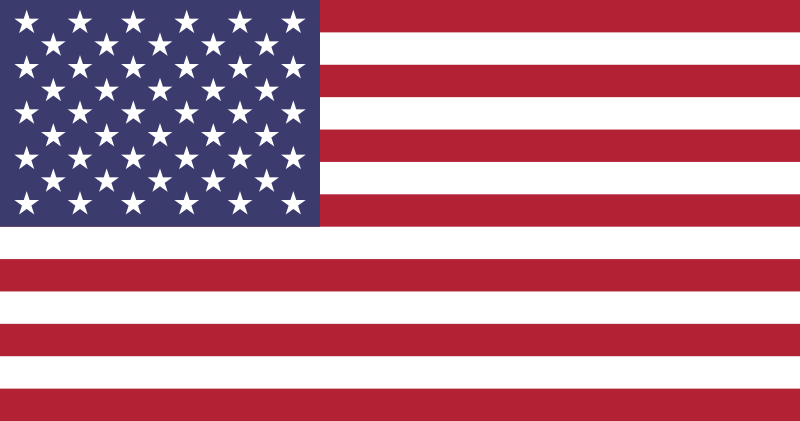
The Catalan origins of the flag of the USA


The formation of the flag of the United States of America would part from an evolution of the Catalan flag that the English took as a model for the British East Indian Company. Besides its design with red and white stripes, without precedents in England, curiously, the evolution of the number of stripes or paly coincides too ,as in the Catalan ensign, with the number of territories that would represent. From the five original territories (England, Scotland, Wales, Ireland and the American Colonies), as well as the different American patriots revolutionary flags that represented the number of colonies until the flag of the thirteen stripes (seven red and six white) of the thirteen foundational colonies that became independent from the British Crown. Though the number of stripes will remain unchanged from then, and they are the actual number, the increase in the number of States of the Union would be represented by the number of stars within the flag. Because of the red colour used, design of the stripes and their territorial meaning, the Catalan influence in the historical and iconographical reference appears evident in the origins of the formation of this flag.


Evolution from the Catalan ensign to the actual flag of the United States of America


But the presence of the Catalan stripes is not an exclusive fact of the National flag, other North American States and Puerto Rico reflect an original Catalan presence that has been usurped, tergiversated and converted in Castilian under the ambiguity of the name “Spanish”.


From the left, the flags of New Mexico and Arizona


Coat of arms of San German de Puerto Rico

The proliferation of Catalan ensigns because of the Catalan presence throughout the world, the ignorance and the oblivion about our nation is so great that there are anecdotes like this one, where a Catalan saw a Catalan flag hoisted by the entrance of a Museum in honour of the USS Constitution, in Boston, and the person who had ordered it, because they had seen it in a paint of the Battle of Tripoli, who had hoisted it every day, could give this man no explanation where that flag had come from. The visitor went away intrigued to know if our ancestors had to do anything with the first international naval battle of the United States of America. If you pay a little attention, is not difficult to find Catalan references in the American films and series.

Catalan contribution in the formation of a new nation

Precisely a sea man, Jordi Ferragut Mesquida, born in Ciutadella de Menorca during the British occupation of the island, who took nautical studies in Barcelona, left Catalonia and emigrated to the United States, where he worked in the Merchant Navy and fought the British in the American Independence War. In the Battle of Cowpens, it was highlighted that he saved the life of somebody called George Washington, one of the fathers of the Nation and who would become the first President of the United States. Jordi’s son, Jaume Ferragut, would be adopted by the future Captain of the Navy David Porter, who changed his name to David Farragut, would become the first major officer of the Navy during the Civil War and was the first counter-admiral, first vice-admiral and first admiral of the US Navy. The name of Farragut is today one of the symbols of America i bear his name several military academies, schools, towns, squares and streets, monuments and appears in diverse manifestations of popular culture, as the fleet of spaceships Farragut in the Star Trek series, or the Commodore Farragut in the novel “20000 leagues under the sea” by Jules Verne. Minorcan’s immigration to Florida within that time was not punctual, even today, their descendents surprise and thrill us seeing that they keep some of the customs, preserving Catalan vocabulary and now, thanks to internet, the blog The Minorcan Factor or Minorcanculture, among some of them.

But Catalan presence in North America did not begin in the 18th Century with Minorcan immigrants or figures like Gaspar de Portolà and Fra Juníper Serra, it is shown evident from the beginning of the Catalan landing in the continent at the end of the 15th Century, with Colom and other Catalans like Joan and Sebastià Cabot in Terra Nova.

The very name of Florida would be a Catalan name too, given by Joan Pons d’Agramunt –later converted by the censorship in a Castilian called Juan Ponce de León. Intuitively, it is perceived the Catalan origin of names like California, Pensacola –from our Peniscola-, and so many others.


Catalan place names in the United States: Barcelona Harbour, València, Farragut, Juniper Serra Mountain, Montserrat, Cabot, Porter, Coloma, Montfort, Pineda, Ponset, etc...

The name of the Nation and the political structure

Like the old Catalonia, the United States of America are formed, like everybody knows and like their own name indicates, by a series of States with their own laws. The North American federal culture is expressed by a national coat of arms with the legend “Pluribus unum”, the unity in plurality. It is common too, the county as a local or regional government form, as well as it was in the Principality of Catalonia. Equally, besides the States, the Federal District, which lays besides of the dependence of any other State member. It is known as Washington DC because of the name of the city that constitutes the district, the official name of this singular territory that exercises as capital of the Nation is District of Columbia, hence the initials DC.


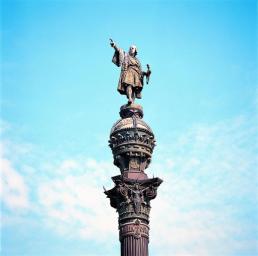
Like in Catalonia, too, the Americans have had their discrepancies with regards to the name of the Nation. Precisely, the denomination of the capital district answers to the remaining of what, at the time, was proposed as the name of the whole Country: Columbia. Explained in the Wikipedia, Columbia was the first popular and poetic name of the United States of America and is a grammatical feminine form derived from the name Cristofor Colom. The denomination dates from before the Independence War in 1776, but was forgotten in the 20th Century. The Americans appealed to the figure of Colom instead of the figure of the Cabot brothers, promoted by the English.

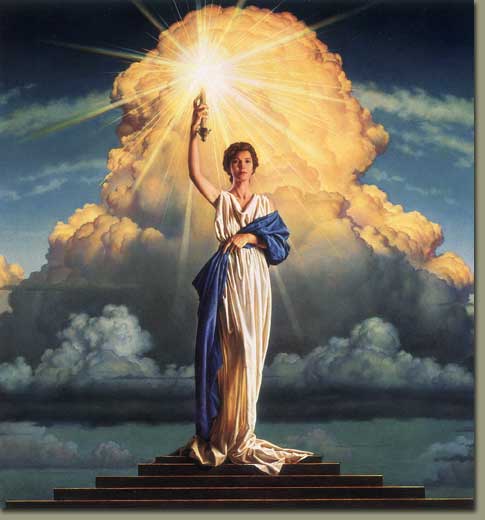
George R. Stewart says that the name “United States” was criticised for too long, imprecise and slightly poetic, and said that the Constitutional Convention in 1787 would have been the perfect moment to change it. The two characters who probably had argued more for a better name, following Stewart, would be Thomas Jefferson and Benjamin Franklin. However, the Nation kept the name of “United States” although the popular support for “Columbia” remained. Finally, the establishment of a new independent country with the name of Colombia had provoked that the denomination “Columbia” was not longer available for the United States, therefore their progressive abandonment. In spite of that, the name “Columbia” appears constantly in North America and even remains as the personalization of the Nation in feminine figure, equivalent to the masculine “uncle Sam”, normally associated to the President.

 
Columbia, the feminine representation of the United States of America, derived from Colom, is today symbol of Columbia Pictures. The United States and Catalonia in today’s world.


The United States have always looked out for our country in the moments where new independent States have been born in the old Europe. The return of Catalonia to the international political arena is seen with good eyes by  America, which need to have strategic associates in the western Mediterranean, with European States dedicating their efforts to improve their economies, and not managing internal territorial problems. But from Catalonia, we have not understood nor correspond adequately the possibilities that the international chequer offers to us.

Yet with President Wilson, the regionalist Catalan politicians at the beginning of the 20th Century missed asking him for support for having an Autonomy, that he declined for being and “internal affair” with the Spanish State, instead of asking directly for independence, in a moment where the independences of Poland, Czechoslovakia, Hungary or Ireland were facilitated. During the 2nd World War, too, existed a project to make, at least the Principality, an independent State to facilitate the Allied offensive against Fascism in Europe, that finally was not approved. More recently, President Clinton affirmed that “future will be either Catalan or Taliban. In a Catalan world, we would celebrate the differences, because they are a manifestation of the common Humanity. In a Taliban world, the differences are the only thing that matters”.

Events like September 11th 2001, unite one more time America with our own September 11th 1714 and increases the long list of shared symbols, even though Spain has tried to hide and usurp them. Now, the United States are to begin a new era with a new President, it is interesting to see how the American Democrats have adapted the Catalan donkey as the sign of their party. Democrats Abroad have bought copyright to the proprietor of said donkey to use it as the official sign in the campaign of Barack Obama to the American Democrats overseas. And from the Republican benches, Robert Kagan, John McCain’s assessor in international politics, referred to the supporters for independence of Catalonia and other European countries in a press article. Nobody was surprised that with the actual American President, we have another opportunity to see an independent Catalonia among the other European nations. But to do so, Catalans must have especially present this paragraph of the Declaration of Independence of the United States: “But when a long train of abuses and usurpations, pursuing invariably the same Object evinces a design to reduce them under absolute Despotism, it is their right, it is their duty, to throw off such Government, and to provide new Guards for their future security”.

Published at “Es Poblat d’en Talaiotic”

What we must do now

When most visible becomes our collective condition of submission, some of our compatriots inclined to demoralize would like to throw in the towel. This state of mind is not only due to our inexistent trust in our leadership –we are unable to see them giving us a victory as a nation-, but combined with the most diffused voices within the public opinion, which are constantly generating a perception that Spain is winning the battle. In addition to that, the occupiers publish what they loot in form of fiscal balances and it does not happen anything.

Among our most representative people, all are laments and calls to resistance, and the formulae to escape from them are always the same: to stay put, to use the little we have and pray to the Virgin of Montserrat. No one of our main opinion makers of the country is going  beyond describing the adverse effects of the viruses called Spain and France. We lack so much in patriotic gestures that there have even been who has seen Jose Montilla’s last attitudes in the financial theme some reincarnation of Pau Claris. A victory can never be built on these foundations. Hence, what must be done? To continue with the same old unsuccessful attitudes or to have the audacity to begin walking through new pathways?

There will be who believes that there is no life beyond new political parties with representation in the Parliament. Most of these think that everything has to go through the sieve of Esquerra Republicana de Catalunya or Convergencia i Unio, and they limit themselves to force “one step beyond” the main leaders of these formations. We have been so many years without having political parties that we think that maintaining the actual ones is our least harm. But reality says that this way of seeing things has consolidated a harmful ruling of the actual political parties that has smeared all with subsidies, dropping their pants down in front of the government of Madrid and make all kind of buttering up to the great communication or economic groups. It is not strange, then, that the beginning of a sensation that who is really in power within the Principality of Catalonia are some people with office at the top floor of some emblematic buildings in the city of Barcelona.

However, I reckon that seeing the last Congresses of the two parties self-called of exclusive Catalan subjection –what a sarcasm!- it does not invite to a lot of optimism. Seeing their results and confirming that the sensation that the end of an era has arrived it is the same thing. Their principal leaders would like to lengthen to the infinite the era of blurriness, but the people with clear Catalan national awareness is fed up with waiting and want something happening. They are neither willing to wait another ERC congress in June nor they believe the euphemisms that came out in the last conclave of CiU. Patriotic people want clarity because they consider exhausted the times of fuzziness. Ambiguity would work in other times and being the essence of one political party. This characteristic has even become one of the polling clues to govern Catalonia for twenty-three years. What has remained? A profound deception and the sensation that they have eaten some ground. This is how the promoters of this politics have acted, what can we expect from their political offsprings?

For all this, the idea of a new political formation that embodies a real, authentic, modern and operative support for independence is taking shape. With faces and styles without any connexion with thirty years of abandoning own principles. Possibly, this feeling is produced at the moment in small cores but is spreading quickly, and without any doubt is combined with the incompetency of the actual leadership of the country and the colonial treatment that Spain is brooded about visualize constantly. However, who will thread the needle?
From Catalunya Acció, we shall never tire to repeat this necessary convulsion in our politic arena. Even more, we shall not remain here. We shall do everything possible to become one of the foremost makers shaping this new hope that every day claim more Catalan patriots.

Santiago Espot 
CEO Catalunya Acció
(Article published at El Punt, 10-10-08)

Sunday, 11 October 2009

Charles Merrill, Christopher Columbus and Jordi Bilbeny

Almost a year after its publication in the States, it arrives, with perfect aiming, the translation into Catalan of Charles Merrill's book Colom of Catalonia: origins of Christopher Columbus revealed. It is a matter of the book in which he follows the information published until now, makes an estate of the question, compiles everything new might be and extracts a conclusion. And what is this conclusion? That Bilbeny was right. But not only Bilbeny, because, in reality it is a part of a tradition that begins with Peruvian Historian Luis Ulloa. And is good that the book appears now that October 12th is so near.

I encourage you to use your blogs to speak about the book, the monstrosity of the historical appropriation and Charles Merrill and Jordi Bilbeny. It would not be bad you also link the web of the Institut Nova Historia, the foundation that accommodates Jordi Bilbeny and his team. It is a very good moment to decide to become a member and help, this way, to develop these investigation even more. At the Institute, a lot of investigation and diffusion work is being done to revise History.

The book appears in a moment in which Spain does not stop receiving blows and disappointments. They will not host the Olympic Games in 2016; everybody comments that they are the only ones to come down from the economical recovery; now, President Zapatero sees how the polls are turning against him; Catalans have made explode a democratic earthquake with epicentre in Arenys de Munt; and, for afters, it reappears, with a more than oportunistic translation, a topic that they would like to have dead and buried when the book was publised last year. It is not that I feel a special pleasure in poking in the wounds of the others. I do not consider myself especially sadistic. But I do not feel sorrow for them, to be honest. So, if you would like to broaden your knowledge, there are the books by Caius Parellada, Teresa Barque, and so. But especially Bilbeny's Cristòfor Colom, Príncep de Catalunya, published by Proa.

Xavier Mir

Sunday, 4 October 2009

Racist, xenophobic and excluding Spain

As well as being imperialist, excluding and false –because it does not exist as a Nation-, Spain is xenophobic and racist. Somebody save it from this strong qualifications, because there is always the common people, strange to the imposing politics of the centralist oligarchy from Madrid, who do not know anything and do not understand anything…

The extreme racism against Catalonia is silently promoted by the central Governments from two centuries ago. A careful silence that is represented in the highlights of the newspapers, radio and television stations that follow suite to the cavern and play the game throw the stone, hide the hand. This racist game against Catalonia is also played regularly by the representatives of the law, the CGPJ –Consejo General del Poder Judicial-, TS –Tribunal Supremo-, TSJC –Tribunal Superior de Justicia de Catalunya-, TC –Tribunal Constitucional-, National Police, Civil Guard. Numerous cases that might be attributed to any of them appear every day, do not make me list them all or we would fill the article.

The priority for the Spaniards promoters of racism, the disqualification and humiliating delectation against the Catalan people is to make us oblivious of, to minimize and to dilute the main; the daily looting of our wallets in the form of taxes that never return where they have been paid from and, later, divide equitably among the other poor communities as per inter-regional solidarity.

Spain obviate the 20th article of the Spanish Constitution to the Catalans. It talks about freedom of speech. They put us under the microscope when we meet and when demonstrate, and they will take very short time to apply any newly invented law to illegalize our political parties supporters of independence that do not follow the game of “the yoke and the arrows” –symbols of Falange Espanola- as it has happened in the Basque Country. The situation is worrying because in Catalonia nobody uses violence to expose their political thoughts. In Catalonia, ideas are exposed and arguments are used, not weapons. But some people from the Castilian meseta and other regions do not understand that Catalan people show their ideas within current legality.

Looking at it, is normal, because Catalans have been a mere colony of Spain, whose object for looting is not oil or copper but the money we earn working hard and that, year after year, is converted in infrastructures and equipments from the Ebro to the South.

The Spanish central government does not doubt to approve a fascist demonstration of the Falange Espanola, corroborated by the TSJC, which is the heir to those whom arrived at the people’s homes at night, loaded up the lorry and shoot our ancestors by the cemeteries and other dark places, something not heard of in the civilized countries of the Europe of the 15.

The Spanish central government does not doubt to hinder all those who, always within actual legality, demonstrate their Catalan nationality or their desire for independence, as if it was a crime. Something like trying to prohibit freedom of thought, freedom of choice by the citizens. To declare oneself to support the independence movement of Catalonia in Spain, or to declare oneself as nationalist, is to call oneself “red, hairy, mason, horny and tailed evil”. As in the best times of the Francoist regime.

One of the main conditions for a country to be democratic is freedom of speech, reunion and association. It seems that in Catalonia has not arrived democracy yet. Every time that one initiative that does not agree with the unity of Spain beyond universe takes off, no matter who is in power in Madrid (either PSOE or PP), all Spanish powers bring up the untouchable and holy book of the Spanish Constitution to suppress that movement. They know that with this movement comes the unification of the Spanish Budget, more that the unity of Spain.
Visca Catalunya Lliure!

Pedro Moron de la Fuente
Writer and journalist
President of the association Catalonia Acord

Wednesday, 30 September 2009

Justice vs Fascism in Spain. Or not.

September 13th, 2009. The Catalan city of Arenys de Munt wakes up on that Sunday, two days after the National Holiday, being the first city in the Country to convoke their inhabitants to a plebiscite where the question is: “Do you agree that Catalonia becomes a State of right, independent, democratic and social, part of the European Union?” The two and only possible answers are “Yes” or “No”.

Everything seems peaceful, in order, until two coaches arrive in the city. Those two coaches are not welcome in there. Heavily protected by anti-riot police, they bring unwanted people to the city, people whose sense of evolution has never moved from the darkest ages and who bring sad memories of war, exile, bombings, censorship and fear.

They stop at the Placa Catalunya in Arenys de Munt and start unloading the object of such protection, fifty-eight militants of Falange Espanola. They are next to nothing in Spanish politics nowadays, but they were the only political party allowed in Francoist Spain (1939-75). Ideologically fascist, openly in favour of any Spanish dictatorship and against anything that questioned the unity of Spain. They do not accept any diversity of thought, “One Spain, not fifty-one”, they say. Obviously, they do not apologise for the crimes committed during the dictatorship period nor they show remorse for not doing so. Why? They were the winner side of the war; they had the power during that regime. Spaniards had the chance to make them pay for their crimes, and lost it thirty years ago. Catalans lost, they must feel the consequences.

Despite being allowed by the Spanish Supreme Court, the fascist demonstration only counted with fifty-eight members of Falange Espanola. In front of them, a crowd of thousands of Catalans, kept by the police at long range. Despite one megaphone, the voices of the thousands of Catalans for independence suffocated the fascist’s claim for unification.

The day went by with no remarkable incident, especially after the fascists packed up, jumped up the coaches and turned back to Spain. We did not want you here in the first place, goodbye.

While the Spanish Justice authorized the fascist demonstration, did not permit this poll to occur. So that the organizers had to put in practice the "Plan B".

However, there is an unsettling feeling that seems to keep flying over Catalonia every time and never disappears completely. It comes from the so-called Spanish Justice. Now, the Superior Court in Catalonia has made public a note where the judges do not understand why “the freedom of speech has been criticized”. From Catalunya Acció we ask the Judges of such Court to wander what the hundreds of thousands of people shot by Francoist forces during the fierce repression that followed their victory in 1939 would have said. And ask the hundreds of thousands who had to exile the same question too.

At the same time, a pacific poll –an expression of democracy- is forbidden. Double standards? No, exercise of freedom of speech, say the Judges. I understand that you have freedom of speech in Spain only if you follow the official discourse and do not pretend to see a Free Catalonia; otherwise there is silence, or prison. And the –Constitutional- threat of being sent the Army without request.

As you may see, all was very democratic. And freedom of speech was protected. The winner's side's freedom, the other does not deserve it. Because they were the losers, they must feel –and fear- the consequences.

Luckily, several MEP’s from different European countries pointed at the not-so-free Spain and its flawing Justice. Why is only one side allowed to speak and show symbols and ideas that are forbidden in most European countries? From Catalunya Acció we know it is because of lack of cleansing of the roots of the Spanish system after Franco’s death, which is still full of characters directly involved with the regime that killed and obliged to exile millions of Spaniards. To clear the whole Spanish system from undesirable elements, it is necessary a full and deep regeneration. Several very important Catalan politicians have tried to reform Spain over the last hundred and fifty years, clearly unsuccessfully. Therefore, we know for sure at Catalunya Acció that the only way that Catalonia will be free to speak is with independence, which Arenys de Munt voted massively for (96%). As in this case, it will be achieved by democratic means. The trend is unstoppable, nothing will refrain us from reaching freedom, and then, Catalonia, after three centuries, will stand among the free nations of the world.


Monument at the Montjuic Cemetery (Barcelona). In memory of the executed during the Francoist regime (1939-75)

Jordi Margalef Turull
Catalunya Accio UK

Tuesday, 29 September 2009

The name of the Nation (II): Evolution and diversity of denominations

In the last article of this series, I presented the former union or group of countries under the sovereignty of the House of Barcelona and its political structure as origins of federalism, supposing the initial application of the denomination “Catalunya” to that union.

The original denomination: Catalonia

This typical Catalan conception might be the generalized usage, albeit not the only one, because there was no official name as we define it today to refer to that group of territories.

Perhaps at the very beginning the name of “Catalonia” was used to the whole Union because the inhabitants of the Counties of the House of Barcelona might not have any identity connotation, and so it could be applied to Aragon as another possession of the Sovereign. But surely, that denomination was identified as something different by the Aragonese and they did not accept it, hence there is not a single official denomination to the whole of the Crown.

While the Mediterranean countries knew perfectly the territories of the Monarchy as Catalonia –and in this case would be known as the actual Catalan Countries-, it was not rare that Aragonese, Castilian or Hispanic in general without that political culture would call it simply “Aragon”, giving importance to only one territory of the Union, the closest and the one that possessed the title of Kingdom in front of the County of Barcelona.

These contradictions and divergences are not more than another element of the incompatibility of the political culture between Catalans and Spaniards. In fact, the communal existence of the denominations “Catalonia” and “Aragon” within the Chronicles, makes very difficult to know if they are talking about the Principality, the Kingdom of Aragon or the whole Union. What is sure, though, is that in the Chronicles, like Muntaner’s, the term “Catalan” is common in front of the term “Aragonese” to refer to the inhabitants of the different territories.

Some other clear examples, amongst a lot more others, where the denomination “Catalonia” and its derivatives appears to refer to the different territories of the House of Barcelona, its given by Benplantat in his web:

-The Juries at Palermo (Sicily) wrote “Regnum Cathaloniae” when referring to the General Court of Caspe (Aragon).

-Edward III (England) “Mercatores fifeles de partibus Ispaniae, Catalonie et Majoricam”. Majorca was independent in 1340.

-Peter the Great called himself “Heres Cataloniae”, meaning he was the heir of all Kingdoms.

-King James II, in a letter to the Dux of Venice: “…partibus imperi Constantinopolis in Sicilia et Cataloniae”, where the expression Catalonia refers to all Iberian territories.

-King Ferdinand II differentiates between subject traders as “consuli mercatorum tam catalanorum quan castellanorum” (market trades so Catalans as Castilian).

-In the same Constitutions, Vol.I 1292, it says that is not possible to separate the Kingdom of Majorca from the Counties of the North with denomination Catalonia and Kingdom of Aragon, Valencia and Counties of Barcelona, “dominatione Catalonie e dictorum regnorum Aragonum, Valentie et Comitatus Barchinone”. It is clear that the name of these Kingdoms is Catalonia.

Other references:

-1365: the representatives of Majorca wrote to King Peter the Cerimonious, “as Majorcans and populates of that island were Catalan naturals, and that Kingdom was part of Catalonia”.

-1392: Valencian governors addressed to Majorca and complain of the insecurity at sea: “Where is the vigour of the Catalan Nation, that made payable all the surrounding Nations”.

-Vicent Ferrer calls “Catalonia” the Catalan speaking part of Valencia, while he preached in the region of Serrans (Aragonese speaking): “You of the Serrania, who are between Castile and Catalonia, and so take a Castilian word and another Catalan”.

-In the Catalan Civil War (1462-72), Minorca took sides for the Generalitat against the Trastamara’s John II, father of Ferdinand the Catholic. The commotion started in Ciutadella with the chant “Visca Catalunya!”.

Catalonia as a political concept encompassing a diverse Kingdoms and territories was a comparable denomination to what Spain would be in later centuries. The same way that Charles I was known as “King of Spain” without existing any Kingdom with such name, but a set of inherited Kingdoms –almost all them from the old Catalonia, neither Catalan Crown, because no kingdom with such denomination ever existed. The King, though, could receive the treatment “King of Catalonia”, as it is written in the Chronicle of Pere Marsili, 14th Century AD, where they call James I as follows:

"Capitol XXXVII

Lo maestre del Espital per nom Huch de Fuyalalquer ab XV cavalers frares del seu orde, lo qual lo rey havia char e amich especial, e l'havia fet fer maestre en lo regne e en las suas terras per lo maestre major del dit orde, vench al rey de Cathalunya, e demaná sol parlar ab lo rey en presencia dels companyons, e dix: Senyor, pus Deus ha feta la vostra via ó carrera tant be estruga e bona, pregam la vostra pietat que acabets á nos ab los nobles e prelats que el nostre orde haja alcuna rosa en Malorcha".

There are other denominations in use with reference to the King of Aragon, that was the official title of only one of the territories, used preferably to simplify and because it was the title that was superior in hierarchy –king in front of count- and seniority –Aragon before Valencia, Majorca, etc-, to refer to the sovereigns of the House of Barcelona.

-William de Baux, prince of Orange “… to the Emperor of Barcelona”, 1210.

-Marcabru; “Avec l'aide de Portugal et de Navarre e pourvú que l'emperateur de Barcelone", 1261.

15th and 16th Centuries AD: From Catalonia to Spain and the Crown of Aragon. The use of the term “Catalan Nation”

From the Compromise of Caspe (1412) and the enthronization of the dynasty of the Trastamara, Castilian, and the incorporation of more peninsular Kingdoms, like Navarre, Castile and Granada as new partners in the Union, the name of Catalonia as referent was being substituted by Spain, an initially geographical denomination that pretended to facilitate the integration of the new territories joined to the Monarchy of Catalan origins. King Ferdinand II talked of the “Spains” whereas his wife dona Isabella talked only about Castile. This change, from Catalonia to Spain, was not due by imposition of our sovereigns but had to be readily accepted due to the Catalan pre-eminence within the new Crown and as a symbol of our domain. The same adjective “espanol”, with suffix –ol is from Catalan origin. That Spain was an increased Catalonia with new territories and Barcelona as Imperial city where the Crown expanded to the New World, with Our Lady of Montserrat as Saint patron and with a culture that gave works like “Tirant lo Blanc”, “El Llàtzer de Tormos” or “La Celestina” from the Kingdom of Valenca. A rather different Castilian Spain of today, with centre in Madrid and which have been made us believe that existed since the Big Bang.

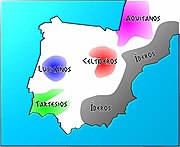
The denomination “Spain”, originated from “Hispania”, started politically from Catalonia in the Iberian era and in the 15th and 16th Centuries AD with the beginning of a new power –Rome in one case, a dynasty of foreign origin in the other- in our territory. In both periods, the power extended throughout the peninsula and became hostile to the reality of the autochthon Iberian or Catalan population.

But as we know, from Castile, in the same way that happened before with Aragon, did not want to see their incorporation to Catalonia -or Spain- in the same way that to our Nation, and they prefer to sell their “tanto monta, monta tanto” as a political conception of union of two crowns, theirs and Aragon, never Catalonia! Effectively, the name “Crown of Aragon” began at that time and in 1493 the old “Consell Reial” –Royal Council- was transformed into the “Consell d’Aragó” –Aragonese Council-. And naturally, the name “Crown of Aragon” was imposed by the revisionists when Catalonia was governed from Castile and in Castilian way during the 16th Century.

This is the vistion that has been imposed by Spain and that is observed today as “Crown of Aragon” or even worse, “Kingdom of Aragon”, which is what is learnt by Catalans and the rest of the world as the only certain and valid History, like they say that Catalan Kings were Aragonese, that the Catalan flag was Aragonese and that Catalan conquests in the Mediterranean were Aragonese –and exclusively Castilian were the territories in the Atlantic, something absolutely false-. Burying their Catalanism under a few layers of confusion, which pretends to exclude and erase us from the past.

The transformation of the political subject of what Catalonia was within Spain by their sovereigns, with the territorial enlargement in the Iberian peninsula and the application of the name of “Crown of Aragon” to the former Kingdoms would make the Principality become the only territory where the denomination “Catalonia” would apply, in spite of the name “County of Barcelona”. Consequently, inheriting the concept of “Catalan identity” which will be more difficult to maintain in the rest of the nation. In this context, the term Catalan Nation, used long before then, becomes the natural substitute of the term “Catalonia” to refer to the territories of the Monarchy inhabited by Catalans, in front of the official use that was made of “Catalonia”, limited to the Principality and not only to the whole of the territories of the King.

Document of 1444 by the Councillors of Barcelona where “Catalan Nation” is differentiated from “other subjects” of the Prince King.

Naturally, these changes are happening slowly and diffusely, because in the 16th Century we still can observe maps where the denomination “Catalunya” is still attributed to the original territories inhabited by Catalans. Evidently, is simpler to find these references in other countries than in Catalonia, where the Spanish censorship was already working fully. Please observe these two centuries:

Map of 1505 by Andrea Benicasa, preserved at the Vatican Apostolic Library. The denomination that appears in this map is still “Catalonia”, not “Aragon” or “Crown of Aragon”.

Map of 1540 by Battista Agnese. The names that appear are “Catalonia” in one side and “Ispania” on the other, apart from “Regnu Granate”. Do not appear “Castilian Kingdom”, nor “Portugal” that seem to be incorporated to the generic “Ispania”. Neither “Kingdom of Aragon”, “Valencia” nor “County of Barcelona”, included in the generic “Catalonia”.

Map by Americh Despuig (officially known as Amerigo Vespucci), where the name of the Nation is “Regnu Tarraconie et Catelonie”. The denomination “Kingdom of Aragon” is nowhere to be found.

In Naples, the Kings successors to Alfonso the Magnanimous, where treated by the Angevin Party as “Catalans” –“Sto catalano quante ne fa!”, said about Ferdinand I of Naples-.

In Castile, the very King Ferdinand the Catholic was known disrespectfully know as “old Catalan” and “catalanote”.

1554: M. Bandello. Novelle I: "Valenza, gentile e nobilissima, che in tutta Catalogna non è piu lasciva e amorosa città."

The qualification of “Catalans” is known to be given to the Popes of the Borja family, originally from Xativa, by the contemporary Italians -"O Dio, la Chiesa Romana in mani dei catalani"- but even by themselves: Calixtus III was known as “papa catalanus” and considered his pontificate as “gloria nationis catalanae”.

Also from that time, allusions to Catalonia as a Kingdom by Catalanist manipulators like Ferran Colom, son of the Discoverer, and Joan Miquel Servent, the writer. The first, calls “Kingdom of Catalonia” the old Principality, and the latter talks about the Kingdom but also the “viceroyalty of Barcelona”, so that gives the impression that there are diverse viceroyalties, Barcelona amongst them.

From suppression of the Catalan institutions to the destruction of territoriality

As it is known, the loss of the Succession war in the 18th Century AD meant the elimination of the institutions of the different Kingdoms of Catalonia, but the territorial conception does not change in great deal with regards the previous two centuries. The old territories of the Principality of Catalonia, the Kingdom of Valencia, and Majorca preserve their denominations even though their own institutions are not maintained and they depend directly from Castile.

It is with the division in provinces in the 19th Century where a new substantial conceptual change of our territories within Spain takes place. With this model, the conception of unity among the Catalan territories aside to Spain –that was already very precarious- is destroyed, and also the unity of each one of the historical territories, now divided in provinces. Now, the denomination Catalunya completely disappears, as also did Aragon or even Castile itself. The old Principality was divided basically in four provinces –the Western Strip, disputed with Aragon for many centuries, was included and spread within the three Aragonese provinces-, the Kingdom of Valencia was divided in three and the Kingdom of Majorca was initially converted in the province of Majorca and later in the Balearic Islands. The new administrative system, of French inspiration, would only admit one Spanish national reference, with clear Castilian base.

These trials of disintegration and destructuralization of the Catalan territories would go a higher level with projects that did never become real and which pretended to separate the South of the old Kingdom of Valencia from the rest of the territory, in a zone that would include Albacete, Murcia and Alicante, while the territory of Lleida was meant to be grouped with the Aragonese province of Huesca.

This way, we have Catalonia, that, from being the denomination of a whole of the territories was the official denomination of one of those that formed part of the Union, to finally disappear.

Beginning to revert the process

With the First Spanish Republic, only lasting a few months, the name “Catalunya” was recovered as denomination of one of the federate States projected, corresponding to the old Principality, and it would not be until the “Mancomunity”, beginning of the 20th Century, that an administrative organ was created, as a simple group of four Spanish provinces, suppressed with the Primo de Rivera’s dictatorship. The name Catalonia was restored with the Second Spanish Republic in the form of autonomous government as a substitute of Catalan Republic. This autonomy was equally suppressed by the Francoist dictatorship and being restored again within an autonomous regime that put back the Principality, the Valencian Country and the Balearic Islands in charge of a minimal self management in the internal maps of the Castilian State, in company with and diluted at the same level of new autonomies within the Castilian nation like Madrid, the two Castiles, Rioja, Cantabria…

During all these centuries of Spanish distortion and with clear destructive will of our Nation, uninterruptedly have shown, throughout the territory, voices and references to the universal Catalanism of the Pricipality, Valencian Country and Balearic and Pine Islands, that more or less clearly due to clandestinity have arised. The question of the name of the Nation still reappears today, intermittently, to remind us that we have an unresolved question: recover the power to redefine us without the interference from whom question our existence as a Nation.

We must begin the recovery, without euphemisms, of the denomination of the old territories of the House of Barcelona, especially the Catalan speaking ones, as a minimal historical denomination. Aragonese Crown is not valid, and even less is Kingdom of Aragon, that would not be a denomination used by neither our Monarchs nor the Chroniclers, until it was created and imposed by the new Spanish powers in the 16th, 17th and 18th Centuries. Neither valid are other modern euphemisms like Catalano-Aragonese Crown, never used in that era which, more than reflect the reality, repeats the Spanish concept. Catalonia is a historical name that our Nation applied to the diverse territories, perfectly documented and real during the 12th, 13th, 14th and 15th Centuries, no matter that some have wanted to bury it.

Published at “Es Poblat de’n Talaiotic”

Saturday, 26 September 2009

Press note

imageINTERNATIONAL PRESENTATION OF THE BOOK “DISCURSOS A LA NACIÓ (De Catalunya Acció a Força Catalunya) by Santiago Espot.

Santiago Espot, CEO Catalunya Acció and driver of the political party Força Catalunya, will present the book “Discursos a la nació (De Catalunya Acció a Força Catalunya) in Madrid (Spain), at the Centre Cultural Blanquerna (C/Alcalá 44, 4ª planta - Madrid), on Monday September 28th, at 19:30h. The act will be introduced by Mr Josep Maria Vall, editor of the book.

Mr Santiago Espot will give the conference “Arenys de Munt marks the way to independence”, especially directed to those Catalans who reside overseas. After the conference, Mr Santiago Espot will answer the questions that the attending public and journalists might have.

Likewise the poll at Arenys de Munt on September 13th, Spanish fascist groups have threatened to boycott this presentation, demonstrating and blocking the entrance to the building, trying to make impossible the presentation. We also fear of possible physical aggressions to our colleagues or public present at the conference due to violence that such organizations have displayed in front of foreign collectives. A lot of Catalans wander whether the Olympic values apply to the candidature of Madrid 2016 and whether they are compatible with the fascist ideals that are wide spread among Spaniards. Hence, Catalonia opts for the candidature of Chicago.

For more information:
Josep Castany
General Manager of Catalunya Acció
www.catalunyaaccio.org

Thursday, 24 September 2009

Catalunya Acció wins DENAES

TUESDAY, 22/09/2009 - 19:15h

The Spanish High Court confirms that the jeering at the Cup final is not an offence


The Spanish High Court has ratified the last July’s resolution by Judge Santiago Pedraz, who did not admit to procedure the suing presented by the Foundation for the Defence of the Spanish Nation (DENAES) against Catalunya Acció and ESAIT with occasion of the jeering to the Spanish King and Anthem during the Spanish Cup final, in Valencia, played FC Barcelona vs Athletic Club Bilbao.

The High Court rejects the allegations presented by the same Foundation against Judge Pedraz’s resolution. Resolution which qualifies as “misbehaved” all those who whistled and understands that exhibiting an independent Catalan flag or a banner with the legend “Goodbye Spain” is a way of showing “what is preferred”. “There is nothing to say to those who are against the Institutions or symbols of the State and their form and regime fixed within the Constitution framework.

However, it may be different depending the the way in which this is manifested”, says the resolution. DENAES is the same organization that sued in 2006 against Pepe Rubianes following some declarations about the unity of Spain during the program “Les tardes d’Albert Om” (TV3).

Catalunya Accio

Wednesday, 23 September 2009

The name of the Nation (I): Origins of federalism

Treating the question of the name of our nation, the evolution of the denominations that are applied on the whole of the territories populated by Catalans, and our own political structure is something I wanted to talk about for a long time and some comments of readers on this blog have claimed, in more than one occasion, especially as I am used to call the actual “Autonomous Community of Catalonia” with the name of “Principat”.

In the article “El misteri de la paraula Catalunya” –“The mistery of the word Catalonia”-, published last year, I introduced the possibility that the old concept of “Cathalunya” meant “Union of Countries”, a name empty of identity meaning from the very beginning and would designate the whole of the Counties that grouped together around the County of Barcelona. In another article, “Bars in the wind” we can see how the golden bars or paly of our flag would mean each one of the territories that, at each time, were under the sovereignty of the House of Barcelona. In this article and the following of this series I shall give my opinion of the conception and political structure of the Catalan Nation and explain how the denomination “Catalunya” is lost to end up to being the official name of only a part of the territories that formed part of such union.

Political structure of the Catalan Nation: The Principality and the Kingdoms of Catalonia

As it is known, the initial Counties that were formed in the Southern border of the Carolingian Empire were ruled by a Count, from which, the Count of Barcelona appeared to be head.

The Count of Barcelona would be therefore, the first among equals or –primus inter pares- of the other Counts, later in time they all belonged to the Count of Barcelona. This function of being the first among equals would give the House of Barcelona the federal political culture that characterized the territorial structure of their dominies.

The Count Ramon Berenguer IV of Barcelona, at the age of 23, betrothed Princess Petronila of Aragon, a little girl of one year old –although the wedding did not celebrate until a few years later in Lleida, in 1150. From that day, the Kingdom of Aragon –that only occupied a similar territory of what today is the province of Huesca-, that was in great difficulties and to which Castilians and Navarrese had pretensions of, was incorporated to the House of Barcelona, and the “Counts” acquired the title of “Kings” that would exercise for Aragon but kept the title of Count of Barcelona.

The Counts of Barcelona and the Kings of Aragon would be Princes, not in the sense of being the son of the King or heir to the title, because the title of the heir of that crown was “Prince of Girona”, but in the sense of exercise the sovereignty over a number of territories and the “first citizen” with the meaning given in the Roman Empire to preserve their Republican conception.
Found in the Wikipedia, one of the meanings of “Principality” is precisely, “territory where the sovereign has not any specific title or exercises in order of other title”. Therefore, in this number of Counties, we are talking about a Principatus in the Latin sense of sovereignty and was maintained without the category of Kingdom that was given to other territories later joined to the House of Barcelona: Aragon, Valencia, Majorcas, Sicily, etc.

This is when it arises the following question: why did not the Count of Barcelona proclaim as King of Barcelona and the Kingdom of Barcelona was created, as Aragon, Valencia and Majorcas? Why was a territory surrounded by Kingdoms kept that way without “elevating” it to that category? My opinion was that it was never proclaimed as Kingdom of Barcelona due to very diverse reasons i.e. initially, it would not be interesting for the other Counts and institutions to lose power –that they could apply being a Count- in front of a King, for the all time reluctance of the Church in front of the House of Barcelona and finally, but probably most important, they did not need to change a situation that worked well. Contrarily to what one think, the fact of not being a Kingdom might had been beneficial to Barcelona and the Principality because of the equilibrium of powers amongst the Catalan Crown.

The territorialization of the concept of “first among equals” and “Prince” that fell to the Count of Barcelona, implied a County of Barcelona that became “first among equals” in front of the rest of Counties and a “Principality” that, not being formally a Kingdom, was very similar and the first among the Kingdoms of the Crown, because it was the origin, the head and housed the Dynasty of Barcelona, that had created a Monarchy with its territories, each one with their laws and own institutions. With the function of “first among equals” of the Principality, the following Republican versions of Catalan Federalism that were imitated by other Nations, the “first among equals” principle would be represented by the Federal District, a territory with the same category that exercises as Capital of the Federation.

As this model has been imitated in this precise and concrete way, it must be that was right. Effectively, each Kingdom had to have a viceroy who represented the King in that territory, while each modern State of a Federation has its Governor or similar figure. The Federal District, though, is under the direct jurisdiction of the Government of the whole Federation, as Mexico DF, and its government presents some peculiarities with regards to election and naming of the Governors of the State members.

Exactly the same as the case of the Principality of Catalonia, that could not have viceroy because it was not a Kingdom and remained under direct rule of the Count-King, only in case of his absence, a Lieutenant was named as a representative.

The need of a Federal District is justified with the objective of avoiding the influence of particular interests of any member State over the territory, in the same way that was not interesting a Kingdom of Barcelona that might create conflicts between the Viceroy of Barcelona and the rest of Viceroys, whereas it was not possible between the Viceroys and the King in person. A question that still affects the Principality, where everybody seems to have the right to decide about what has to happen or to decide in questions like water, the Royal Archives of Barcelona –ill named “Crown of Aragon”-, infrastructures, finances.

Moreover, the paper of the Catalan Court has to be present. They represented a limitation of the power of the Count-King unedited to other Nations, where Catalan Constitutions were approved and other territories of the Union like Sardinia and Sicily claimed rights to send representatives to, likewise the Kingdom of Majorca. The paper of the Principality of Catalonia that was exercised by the Counties headed by Barcelona, is understood, like a feudal and primitive form of Federal District of Catalonia, and might had the particularity of being an authentic federation –union of counties- inside a bigger federation that was Catalonia.

In the same way that the City of Majorca takes its name from the island and Kingdom where it stands, like the City of Valencia and gives name to the Kingdom capital of , like Mexico DF takes the name of United States of Mexico and the City is their capital. The Principality of Catalonia takes the name of Catalonia from the Union of Countries that were in its own origin, from which was part of and was the first among equals.

The territories of the “Union of Countries” or Catalonia

The old Catalonia formed by the Principality and the rest of the Kingdoms.

It must be highlighted that the shape of the Principality, that exercised similarly to what today we know as a Federal District, is similar to the Iberian peninsular Catalonia at smaller scale. The expansion of federalism To describe the spirit of Catalan federalism, it is very useful the example in Ramon Muntaner’s Chronicle about “the bush of reed”, referred in its context to the Unity between the King Alfonso of Aragon (Valencia, Sardinia, Count of Barcelona and Urgell) and the Kings of Majorca (then reigned by James III of Majorca) and Sicily (then reigned by Frederick II, younger brother of James II of Barcelona), monarchs who carried his signal: –translated- “And nobody asked me: Muntaner, what’s the example of the bush of reed: has that strength that, if all the bush is tied by a rope, and you want to pull it out together, tell you that ten men, no matter how they pull, they will not pull it out, and even more they try: and if they leave the rope, branch by branch, an eight year-old will break it, that not even a bush will remain. And it would be like these three Kings, that if among them there is division or disagreement, God did not want that, we count that the neighbours would like to consummate them, one with each other. Because it is necessary that they guard against this step: while all three are one, they do not fear other power in the World, and this way, as I told you, will be all time sovereigns to their enemies”.

From this paragraph we must highlight the vision of Kingdoms that formed the dominies of the branches of the House of Barcelona and that implied the union of these territories even if they had different Kings, and that our neighbours do not wish more that see us divided and confronted to conquest us. The expansion of the Catalan State, first with the Spains, incorporating Navarre, Castile and Granada to the Crown and the with America, implied that the Catalan political model acquired Worldwide scale.

The Wikipedia says that the word federation comes from the latin “foedus” meaning covenant. And is convening an original characteristic of our political and juridical culture, that is reflected in the territorial and institutional structure of the State, opposed to unitary and unitarian States. Moreover, if Catalonia meant originally Union of Countries, it could be said that the actual term “federal” and the original “Catalan” not referred to a specific identity were equivalent. The explanation that is traditionally offered of our political structure is of a personal union or confederation. But the differences that exist between both systems are of hue or tradition.

Personal unions are more typical of Monarchies and would apply in our case, confederations and federations would be the normal evolution of republics. The degree of union among the State members, the power of the Central Government and the right of secession of the parts make the limits between federal and confederal states was very blurred and more theoretical than real.

Nowadays, Federal or Confederal States are the majority of the countries of the American continent, from Canada (a Federal Constitutional Monarchy with the Queen of England as Head of State) to the Argentinean Republic. From whom did they learn this system? From unitarian Castile, France or England, evidently not. Only Catalan political tradition could be the model. In Europe, we have Germany, Switzerland, Austria, Bosnia-Herzegovina, Belgium and Russia. Other countries in the world that have adopted this political structure are Australia, India, Pakistan, Iraq and Sudan. And other States worldwide tend to federate amongst equals in continental organizations like the European Union.

It is curious that the Catalan Nation, the origin and the introductory of this system, is today cancelled, divided and quartered between two unitarian States; France and Spain, waiting to reappear from its ashes and be able to make new contributions to Humanity. And I do not stop saying the quote by Francesc Pujols at the House-Museum Dali in Figueres: “Catalan thinking always shoots out and survives to its dreamer gravediggers”.

Map of the actual federal and confederal countries. Countries with a genuine Catalan political form.

From “Es Poblat de’n Talaiotic”.

Sunday, 20 September 2009

Building victory IV

Politics of indigence

During the last years, Catalans have attended to a real and intensive Masters Degree in Political indigence. Since the first “Tripartit” (the coalition of Socialist, Comunists and Republicans in the autonomous Catalan government) proposed to renovate that Spanish Organic Law –otherwise called “Estatut”-, that Catalans have been able to evidence, ashamed, the way the Catalan Parliamentarians have starred an endless vaudeville not outclassed by The Ed Sullivan Show. Because, being frank, in a context of economical and national crisis like the actual, the border between the ridicule and the upsetting to which we have attended the “Estatut” number becomes an insult to Catalans.

It has been since thirty years ago that this country was used to sell successes that have been no more than failures and simple smoke curtains to Catalans. It was the consequence to putting in front of the country some ordinary managers of the political indigence that we have inherited today. But reality is tough and always claims its place. There is time when a lot of Catalans realise that is not true that the linguistic policy was a success, nor that we had the best infrastructures of Spain and France, or that even without State, we could use our Catalan in Europe or having National teams like elsewhere in the World. After thirty years, the mirage of linguistic policies and economic politics, social and cultural policies has vanished as the smoke of a wood shaving fire to which Catalans have attended as spectators.

Is it time, then, to stop being spectators and become actors, makers of our future? We now have the historical opportunity to reverse this situation.

Directive regeneration to independence

They say: renovate or die. When the country wants to push towards a direction but their leaders go towards the other, nobody doubt about it; we either change the leaders or we crash with them.

Here we have one of the fundamental conditions that originated the creation of Catalunya Acció. Once the diagnose of the country was made, some action had to be carried out. The first step, of course, started by the beginning of a much needed political regeneration.

But no real political regeneration may happen without a real regeneration of thought, attitude, style but principally innovation. No. There had to be new fire, new ways, new strategies and contributing with new discourse, touching, able to shake the country's morale. To recover the energy, strength, nerve in the discourse to shake the tamed Catalanism that we had in front of our Nation for the last thirty years.

To substitute this obsolete political class, what sort of leadership has to mark the way to independence? How the speeches to the Nation have to be to start a real break with everything established to date? And, especially, how can we assure that we shall not repeat the ways that have showed flaws? Certainly, political regeneration of a country is such a large range project that requires of a strategy that is not built in a few days, or even improvising.

Because, at the end, what future do we want? To create a new Convergencia or a new Esquerra that were really pro-independence, risking the repetition of organization and strategy models that have failed? No. We must go beyond that; regenerating politics coordinating these two fundamental pillars of the country that claim a change of course and an urgent new national focus. This is the change of mind that we have spoken about at Catalunya Accio, and this is, without a doubt, what will guarantee the authentic winning horse to the next elections in 2010. A Company of Companies with the standard of coordination: the Company of Almogavers of the 21st Century.

Time is not for Catalonia. The responsibility of the actual moment demands the maximal implication of Catalans to initiate the course to the authentic political transition that we provide the country with. The count down has begun. Let’s be worthy of not deceiving the country and return Catalonia the opportunity to build a collective victory that we have at our hand’s reach: Independence.


Albert Ubach

Member of Catalunya Acció

Saturday, 19 September 2009

Building victory III

Content and form of the political discourse of victory

What has to be the political discourse to bring Catalonia to victory? May a discourse take a country to independence?

Not long ago, the eminent Doctor Joan Solà went up the podium for the speakers at the Parliament of Catalonia and starred one of the most graphical acts in the last times; a publically telling off, at their faces, of the Members of the Catalan Parliament who do not represent the people who are said to represent any longer. And even more graphical was the fact that, at the end of his speech, the Catalan MP’s applauded, standing up as if, in the last minute, they resist to bow ashamed.

Without a doubt, this is one of the most representative images of how necessary the political regeneration of the country becomes an urgent need if we do not want to perpetuate our Parliament in this constant circus of political miseries.


Pointing out Catalan political agenda

We do not want anybody to fool themselves; the battle for independence will be won by the oratory strength of our leaders we elect to free her. It does not exist such “calm divorce from Spain and France” that CiU and ERC have claimed for so long.

Four years ago, when Catalunya Acció was born, we knew what we were talking about when we stuck to starting the political regeneration that the country needed if we wanted to break with the encasing madness of our Parliamentarians. Because to take back the country we have inherited after thirty years of nonsense we must develop an exercise of responsibility to impulse a new political style, separated from who has participated in such National breakage for such a long time.

Today, after the presentation of Força Catalunya last spring, we must celebrate that, as inspirers of this political regeneration, the Catalan political agenda of whom aspired to renovate the political discourse will have to be marked, invariably, by the way Catalunya Accio is marking from a long time.

The dialectical battle, battle for victory

But if regenerating politics asks for new faces who have not participated in the National breakage that we have inherited, the first step begins by building a discourse of renovation that shatters the forms and pusillanimous attitudes from who we are used to. Yes, we must bet for touching, vibrant, burning politics. And it must be recovered, too, a dose of necessary aggression to win the dialectical battle that Catalonia must fight in the next few years.

We have the historical opportunity to break with the past and the present, and make it not by being spectators but the makers of the dialectical combat to which Catalonia must be prepared to in the near future. And nobody had any doubts about that, this battle will be only won by the most prepared side, the most able to create the best discourse, the best oratory and the maximal political audacity.

This is the discourse of victory. And all with the aim of returning this country to her condition of European State, beginning by never again having to see as one of the most eminent figures of this country, Dr Joan Solà, had to remind us what is the authentic face of shame.


Albert Ubach

Member of Catalunya Acció